Digital Manufacturing & Engineering Program
The courses in this program:
- explore how digital transformation and emerging information technologies (especially Agentic AI, blockchain, and security) foster innovation to achieve a competitive edge in the manufacturing & engineering industries.
- are customized based on the specific manufacturing engineering industry (e.g., Automotive, Aerospace and Defense, Electronics and Electrical Equipment, Chemical and Pharmaceutical, Industrial Machinery and Equipment, Consumer Goods, Energy and Utility, Textile and Apparel, Food and Beverage, Paper and Packaging), and the backgrounds and objectives of the candidates.
This 4-course customized program (described below) prepares IT professionals and non-IT executives to lead at the intersection of manufacturing & engineering and digital technology. Participants will learn to:
- Evaluate Industry 4.0/5.0 trends, smart factory architectures, cloud PLM, and IT/OT convergence and governance
- Apply Agentic AI and computational simulation (CAE/FEA) to product design, and connect the digital thread from CAD/CAM through shop-floor execution
- Deploy Industrial IoT, digital twins of plants and assembly lines, computer-vision quality inspection, and predictive maintenance for zero unplanned downtime
- Modernize operations through cloud ERP, Manufacturing Execution Systems (MES/MOM), AI demand and materials planning, and paperless shop-floor workflows
- Govern industrial IT/OT investment, ensure OT cybersecurity (IEC 62443, CMMC/NIST) compliance, and guide sustainable/reshored manufacturing strategy

The following are the descriptions of the 4 courses for this program:
1. Digital Manufacturing Trends, Industry 4.0/5.0, & Industrial Strategy
The global manufacturing and engineering sector is undergoing a massive shift driven by supply chain re-shoring, human-centric automation (Industry 5.0), and rapid digital convergence. Designed for manufacturing leaders, engineering directors, and technology executives across discrete and process industries, this course explores the commercial, operational, and technological forces shaping modern production. Participants will evaluate smart factory architectures, cloud PLM, resilient supply networks, and strategic business-IT/OT alignment required to optimize capital expenditure and accelerate time-to-market.
Key Focus Areas: Manufacturing Macro Trends & Industry 4.0/5.0 Strategy; IT/OT Convergence & Governance Architectures; Multi-Cloud Governance, Cloud PLM & Digital Thread Continuity; Re-shoring, Localized Sourcing, & Supply Chain Agility; ESG, Energy Efficiency, & Scope 1–3 Carbon Tracking; Strategic Business-IT Alignment.
2. Engineering Innovation, Simulation Modeling, & Generative R&D
Accelerating product development requires replacing physical prototyping with advanced computational modeling and AI-driven engineering design. This course focuses on the strategy, tools, and workflows transforming engineering R&D. Engineering leads and technology executives will evaluate Generative AI for lightweight structural design, physics-informed neural networks (PINN) for fluid dynamics, high-performance cloud simulation (CAE/FEA), and collaborative digital threads connecting product engineering directly to shop-floor tooling.
Key Focus Areas: Generative AI for Structural Product Design & Material Selection; Computational Physics Simulation & Cloud CAE; Model-Based Systems Engineering (MBSE); Digital Thread: Bridging CAD/CAM, PLM, & Shop-Floor Execution; Rapid Prototyping & Industrial Additive Manufacturing (3D Printing); IP Protection & Cloud Engineering Security, and Multi-Cloud Governance.
3. Smart Factory Operations, Industrial IoT, & Digital Twins
Transforming production facilities into intelligent, self-optimizing environments requires deploying sensor networks, edge compute, and dynamic real-time models. This course examines the selection, implementation, and management of smart factory technology suites. Operations and plant leaders will evaluate Industrial IoT (IIoT) telemetry, real-time Digital Twins of assembly lines, predictive machine maintenance, computer vision for automated quality control, and private 5G shop-floor connectivity.
Key Focus Areas: Industrial Digital Twins for Plants, Lines, & Assets; IIoT Sensor Arrays, Edge Computing, & Machine Telemetry; Computer Vision for Automated Quality Inspection & Anomaly Detection; AI-Driven Predictive Maintenance & Zero-Unplanned-Downtime Strategies; Private 5G Networks, Cobots, & Autonomous Mobile Robots (AMRs); OEE (Overall Equipment Effectiveness) Real-Time Analytics
4. Supply Chain Orchestration, Manufacturing Execution (MES), & Back-Office ERP
Achieving high-performing manufacturing operations depends on seamless synchronization between enterprise planning, supplier networks, and shop-floor manufacturing execution systems (MES). This course focuses on modernizing internal operations, inventory allocation, and fulfillment networks. Executives will evaluate cloud-native ERPs, modern MES/MOM (Manufacturing Operations Management) platforms, AI-driven demand replenishment, automated freight auditing, and robotic process automation (RPA) in manufacturing back-offices.
Key Focus Areas: Cloud ERP, MES/MOM, & Shop-Floor Integration Architectures; AI Demand Forecasting, Material Requirements Planning (MRP), & Inventory Optimization; Supplier Network Visibility & Dynamic Procurement; Paperless Shop-Floor Operations & Digital Work Instructions; Multi-Cloud Governance; RPA & Agentic AI for Back-Office Order Management; OT Cybersecurity (IEC 62443, NIST 800-171 / CMMC Compliance).
Courses from the Supply Chain Management Certificate should also be considered
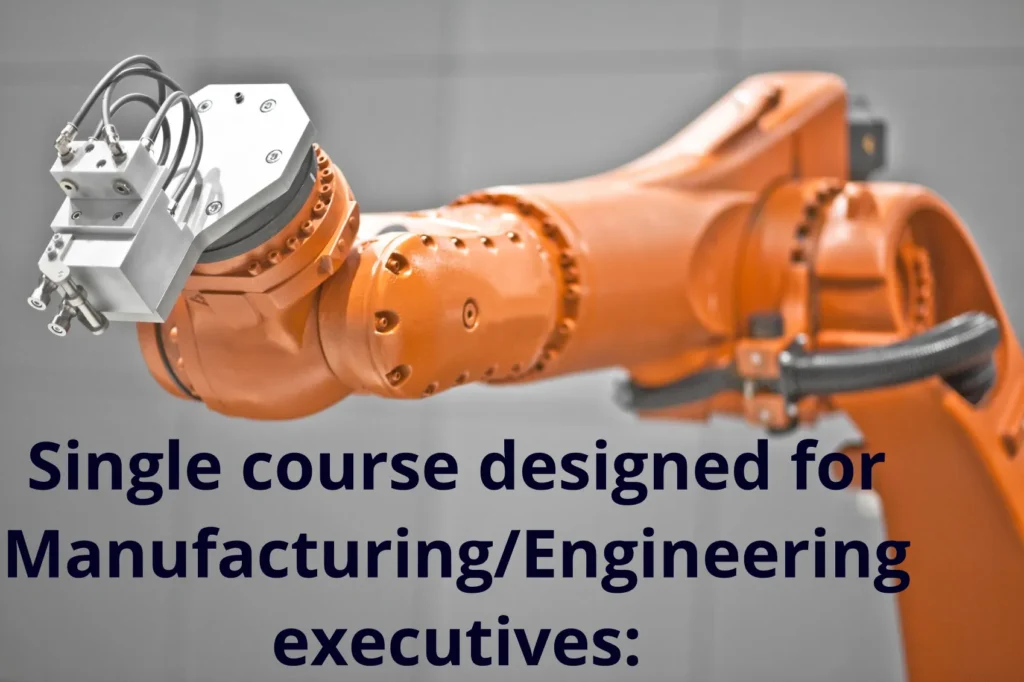
As manufacturing and engineering organizations accelerate digital transformation across product design, plant operations, supply chain, and field service, strategic technology investment is no longer an operational expense—it is a central driver of operational margin expansion, product quality, and competitive differentiation. Operating in a capital-intensive, resource-constrained, and highly regulated global environment requires senior executives across both business and technology functions to jointly govern IT/OT resources, manage risk, and foster cross-functional harmony.
Designed specifically for senior manufacturing leaders, engineering executives, and technology officers, this course provides the strategic frameworks, governance models, and decision-making tools necessary to maximize the value of industrial technology investments. Participants will evaluate how to establish decision rights, balance CapEx and OpEx technology investments, ensure industrial cybersecurity resilience, and capitalize on disruptive digital capabilities—especially AI and smart plant automation—to scale business operations and lower total cost-to-serve.
Program Format: Live / Synchronous (In-Person or Online) | 20 Contact Hours (Ten 2-hour executive modules)
Target Audience: C-Suite Executives (CEO, COO, CIO, CTO, Chief Manufacturing Officer, VP of Engineering, CFO), Plant Managers, and Regional Operations Directors across Discrete Manufacturing, Automotive, Aerospace, Industrial Equipment, High-Tech, and Process Industries
Key Executive Focus Areas
Cross-Functional Business-IT/OT Alignment: Formulate unified digital strategies that directly align technology investments with shop-floor productivity, scrap reduction, and operating margins.
Governance, Structure, & Sourcing Models: Establish robust governance frameworks, SaaS/vendor management strategies, and clear accountability structures across plant engineering, operations, and corporate IT.
Strategic Deployment of Industrial AI & Automation: Evaluate the ROI, risks, and operational impact of Generative AI in design, automated quality inspection, and predictive factory maintenance.
Maximizing Financial IT Value & Capital Allocation: Apply executive frameworks to evaluate Total Cost of Ownership (TCO), manage CapEx/OpEx allocation, and measure return on investment (ROI) across smart factory deployments.
Industrial Cybersecurity & Critical Infrastructure Protection: Protect operational continuity by establishing zero-trust OT cybersecurity postures, IEC 62443 standards, and CMMC/NIST compliance across manufacturing networks, and Multi-Cloud Governance.
Supply Chain Resilience & Sustainable Manufacturing: Guide executive strategy for balancing localized production networks against global supplier integration and carbon accounting mandates.
Executive Leadership & Change Management: Lead organizational transformation and foster collaborative partnerships between plant engineers, operations leads, safety officers, and technical teams.
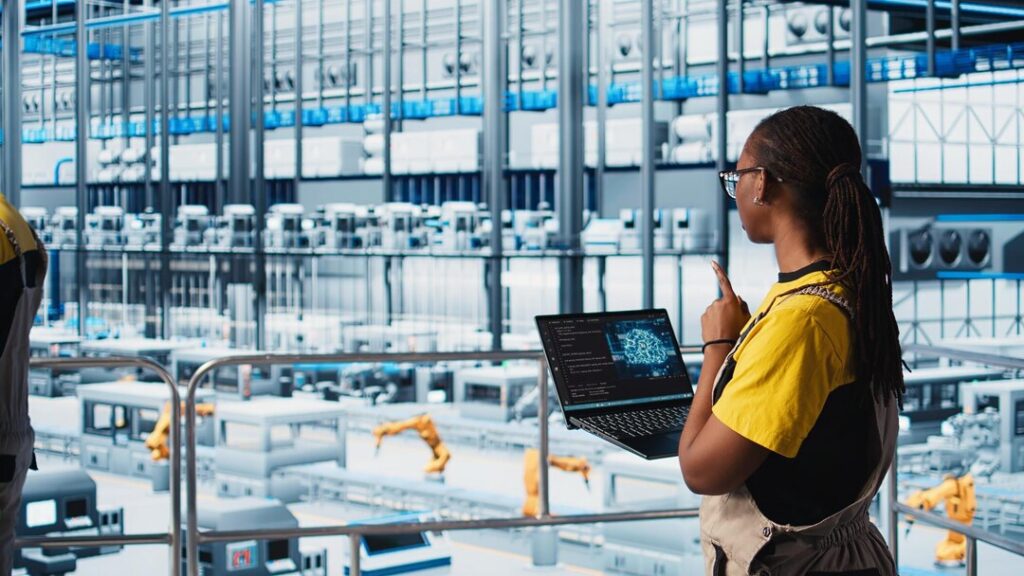
We offer the flexibility to integrate courses from other programs with a tailored focus on the Manufacturing Sector.