Three (3) Digital Human Resources Programs
This program addresses three important considerations:
1. HRIS for IT Managers: IT managers interested in enhancing their “people management” skills and effectiveness.
2. Digital HR Certificate: HR professionals and other non-IT executives looking to strengthen their support for IT employees/organizations.
3. AI in HR: Leveraging emerging HR technologies (especially Agentic AI, blockchain, and security) across the entire HR value chain.
Courses selected and customized from the descriptions below.
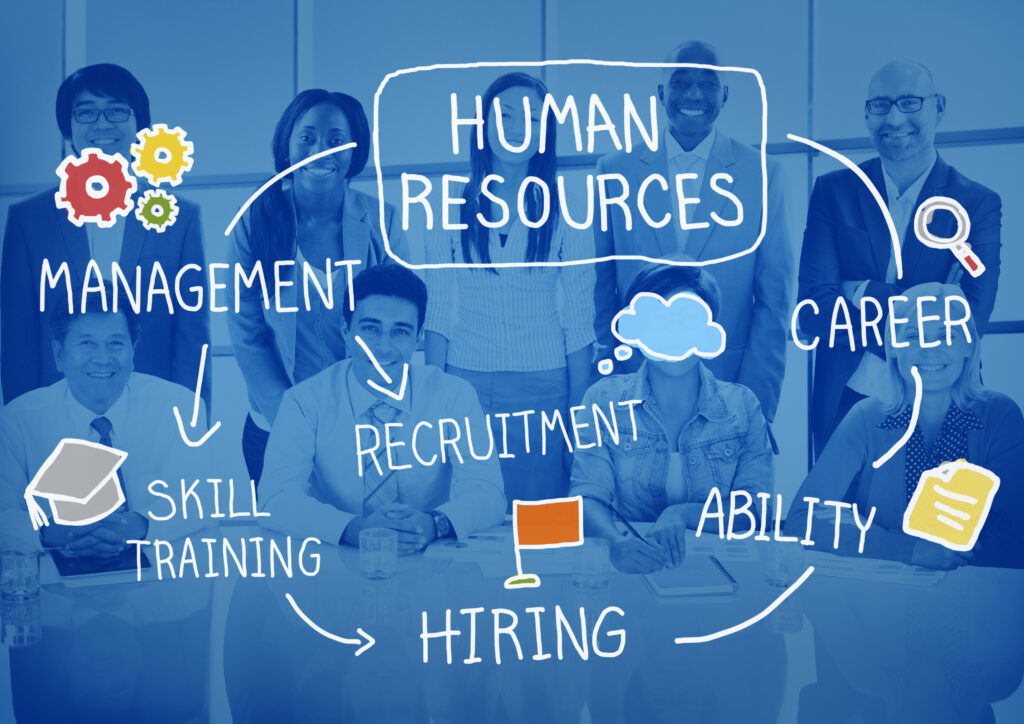
Built for IT managers strengthening their people-management skills and for HR professionals supporting IT organizations, this program (described below) covers the full digital HR value chain. Participants will learn to:
- Apply organizational behavior principles — motivation, leadership, communication, and group dynamics — to manage people more effectively
- Map, automate, and evaluate HR business processes such as hiring, retention, compensation, and skills development
- Track emerging HR technology trends and evaluate HR Information Systems (HRIS) for payroll, recruiting, performance management, and workforce analytics
- Develop strategies to hire, train, retain, and value a diverse and inclusive workforce, and navigate cross-cultural teams
- Assess sourcing strategies (in-house vs. outsource) as they apply to HR and IT staffing

Select at least 4 courses from the following:
( All courses are available live/synchronously face-to-face & online)
1. Organizational Behavior
This course will provide participants with an overview of the individual and interpersonal factors affecting the operation of organizations. It addresses the individual, the group and department, and the overall organization itself. Topics to be covered will include a view of the organization as a structured system of groups and individuals, job design and job behavior, individual and group performance, motivation, job satisfaction, leadership, intra and inter-group conflict, communication, power & politics, and organizational design. The course will help participants assess their own strengths and weaknesses as employees, group members, and (future) managers.
2. Architecting IT Sourcing & Ecosystem Strategy: Insourcing, Outsourcing, & Global Delivery
Course Overview
In an era driven by rapidly evolving cloud architectures and AI acceleration, deciding where and how to build, buy, or partner is a critical executive decision. This course provides a strategic framework for formulating and executing end-to-end IT sourcing strategies that balance cost, speed, security, innovation, Multi-Cloud Governance and Agentic AI.
Key Focus Areas
Insource vs. Outsource Evaluation: Establish data-driven criteria to determine optimal operating models for core vs. non-core capabilities (application development, cloud infrastructure, AI platforms, and service desks).
AI & Next-Gen Workflows: Integrate emerging technologies and automation into strategic sourcing frameworks to maximize operational throughput.
Global Delivery Ecosystems: Evaluate onshore, nearshore, and offshore partner networks to optimize talent access and risk diversification.
Supplier Selection & RFP Management: Master vendor evaluation, contract structures, and competitive bidding processes for strategic technology partners.
Transition & Change Management: Navigate seamlessly from strategy execution through transition, vendor onboarding, and internal team upskilling.
3. HR Processes & Services
The course addresses the techniques and concepts required to map, implement, automate, and evaluate HR business processes. These processes include hiring, retaining, motivating, compensating, benefits, assessing, eliminating, and skills development. Focusing on the technical and implementation aspects of Business Process Management, the course leads participants from technical process design through the implementation and management of workflows to the structure of process-aware information systems supporting HR. It discusses the distinction between business processes and business rules and outlines how they can be supported by technology. It details the technical structure of HR process-aware applications and provides an overview of technology standards that affect BPM systems. Modules on the run-time monitoring of HR processes and post-execution evaluation techniques complete this course.
4. Trends & Directions in HR
The dynamic business and technical environments demand that IT and HR work together to define the strategies for leveraging IT to enhance HR services. Understanding changes such as the shifting economy, globalization, different generations and staff diversity, work at home considerations, in concert with emerging technologies such as Agentic AI in HR (autonomous recruiting and case-management agents), Cyber Resilience/Zero Trust for protecting sensitive employee data) and business intelligence has become fundamental.
This course focuses on how HR and IT organizations can effectively and efficiently assess trends and emerging technologies. Participants will learn how to help their organization define, select, and adopt new information technologies.
This course will introduce candidates to new directions in information systems and effective approaches for evaluating their relevance and applicability to their business environments as well as the new challenges and problems that they present. They will learn about emerging technologies and the latest design trends in data and knowledge, networks and applications in terms of what issues they address and in particular, how HR organizations can exploit them for competitive advantage.
5. Architecting Next-Gen HR Technology: Driving Talent & Business Performance
Course Overview
Modern Human Capital Management (HCM) relies on robust, scalable, and intelligent IT architectures. This course explores how leading enterprises leverage cutting-edge HR technology ecosystems to streamline operations, enhance employee experiences, and drive workforce intelligence.
Key Focus Areas
Core HR & Global Payroll: Designing seamless systems for benefits, payroll, timekeeping, and compliance.
Strategic Talent Ecosystems: Deploying AI-powered solutions for recruiting, performance management, learning (LMS), incentive structuring, and succession planning.
Workforce Enablement & Analytics: Building intuitive employee self-service portals and actionable workforce analytics.
Enterprise Sourcing & Vendor Strategy: Navigating SaaS customization vs. native integration, and in-house management vs. strategic outsourcing.
Platform Evaluation: Assessing industry-leading platforms—including Workday, SAP Success Factors, Oracle Cloud HCM, ADP, and UKG—against organizational strategy and ROI goals.
6. Inclusive Leadership & Global Talent Strategy: Building High-Performance, Diverse Teams
Course Overview
In today’s interconnected global economy, building and leading a diverse workforce is no longer just a talent initiative—it is a core business strategy. From mitigating AI bias in emerging technologies to driving product innovation, diverse perspectives unlock critical competitive advantages.
This executive course equips leaders with the frameworks, intercultural competencies, and strategic tools necessary to source, integrate, retain, and empower global talent while driving cross-cultural synergy and business resilience.
Key Focus Areas
Strategic Talent Acquisition: Eliminate conscious and unconscious bias across the talent lifecycle—from job architecture and executive search to onboarding.
Mitigating Tech & AI Bias: Address systemic blind spots in algorithmic design, cybersecurity, and product development by embedding diverse perspectives into tech innovation.
Intercultural Leadership & Engagement: Develop cross-cultural management competencies to lead global teams, improve alignment, and elevate productivity.
Inclusion as a Growth Driver: Leverage diverse market insights to enhance client engagement, expand into global markets, and elevate brand value.
Retention & Organizational Culture: Establish sustainable inclusion practices that reduce turnover, foster psychological safety, and maximize long-term business performance.
7. Human Resource Management Elective
This course looks at the management of people in organizational contexts to create awareness of essential organizational resources. The course highlights the most important elements and tools human resource (HR) managers can adopt, and discusses ways of maximizing their efficacy, focusing on IT considerations.
Learning Outcomes
Knowledge: On completion of this course the successful candidate will demonstrate:
- An in-depth and advanced knowledge and understanding of the key elements of HR management
- A systematic knowledge and sophisticated grasp of the different tools HR managers have at their disposal
- A critical awareness of the suitability and limitations of HR tools for different people management-related problems, enabling them to recommend ways of maximizing the efficacy of different HR tools and propose solutions.
Skills: At the end of this course the successful candidate should be able to:
- Critically evaluate the role of HR in business organizations
- Assess the impact of different HR tools for key areas of HR management
- Research and appraise suitable HR tools for a number of different organizational problems
- Recommend appropriate HR tools for a number of people-oriented business problems and assess their impact
- Critically evaluate different leadership models and put forward approaches of leadership to professional situations in case studies.
Course Topics Include:
- The role of HR in business organizations
- Recruitment and selection
- Employee induction
- Human resource development
- Performance management
- Reward management
- Leadership

Individual customized course for senior executives
Single bespoke course designed for executives interested in digital HR considerations.
As IT skills, resources and sourcing models continue to evolve, and HR organizations continue to experience the digital transformation, they are focusing their investments in leveraging information technology (especially Agentic AI) to improve outcomes, improve the quality of their services, and lower overall costs. In today’s highly regulated, increasingly resource-constrained, and cost-focused environment it is essential to understand how to effectively and efficiently manage an organization’s information technology (IT) human resources. There are numerous strategic, tactical, and operational choices to be made about managing IT resources and it is essential to ensure that IT and non-IT executives across the organization work in harmony.
Organizations need well-conceived organizational structures, skills, processes, and decision rights to ensure that IT investments are appropriately leveraged across the organization, especially when considering the impact of emerging information technologies and the resources/skills necessary to support them.
This course prepares executives/professionals (HR and non-HR ) by providing a comprehensive understanding of the fundamental decisions related to the management of IT resources in this dynamic environment. The course will also provide an overview of current and future relevant information technologies and their potential impact on HR organizations, and associated stakeholders.
IT-HR topics include:
- Deriving IT-business strategies
- Changes in digital skills and sourcing
- Considerations for types of organizational structure, governance (i.e., decision-making and decision rights), roles/responsibilities, and processes
- Leverage emerging digital HR technologies; especially AI, blockchain, and security
- The business value of IT
- The definition, concepts, and contexts of HR IT
- Enhancing business-IT alignment