Digital Education Programs
Two (2) digital education certificates/programs:
1. Digital Classroom/Faculty
2. Digital Campus/Infrastructure
GIIM will work with you to derive the appropriate focus & content for the courses within this program, based on the specific type of education institution/organization (e.g., K-12 Educational Institutions, Universities and other Higher Education Institutions, Educational Publishing Companies, EdTech Companies, Tutoring and Test Prep Companies, Professional Development and Training Companies, Language Learning Companies, Educational Toy and Game Companies, Educational Consultants and Advisory Services), and the backgrounds and objectives of the candidates; all with a heavy emphasis on the impact of AI.
This bespoke program (described below) prepares education leaders to deploy technology (e.g., AI) effectively across teaching, training, and campus operations. Participants will learn to:
- Define strategies for deploying education/training initiatives using synchronous, asynchronous, and blended delivery models, including Universal Design for Learning (UDL)
- Navigate cultural and language considerations for international and cross-organizational education and training programs
- Design and evaluate curriculum using project/process-based learning, adaptive learning, and rapid prototyping techniques
- Apply train-the-trainer methods to manage organizational transitions and build new skills during technology change
- Address the full education IT value chain — academic support, school/campus management, and higher-education systems — leveraging AI

The four (4) course descriptions for the Digital Classroom/Faculty program are:
1. Effective Use of Technologies in Training / Education
Course goals and content are designed to enable organizations (e.g., managers, teachers) to define strategies and plans to deploy education/training initiatives (e.g., technical training, management and skills development) and associated administration processes through the effective utilization of various delivery models and approaches; especially online, leveraging emerging digital technologies like AI (especially Agentic AI). The course focuses on the process for analyzing the objectives of the training/education programs, and defining specific organizational strategies, while designing effective plans for current/emerging technology utilization, including synchronous and asynchronous education/training initiatives, and adaptive learning.
Topics & concepts:
- Value of Providing Education/Training to Candidates/Employees
- Defining Program Objectives; Identifying the Gap Between Required/Future and Current Skill Sets
- Considerations for Synchronous (online and face-to-face), Asynchronous, and Blended/Hybrid Delivery/Communications
- Deriving a UDL blueprint for creating instructional goals, methods, materials, and assessments that work for everyone, not just those with disabilities. It emphasizes flexibility in the ways students access material, engage with it, and show what they know.
- Alternative Online/Cloud Delivery Approaches (e.g., Texting, Forums, Chats, Blogs, Webcasts, Podcasts, Webinars, Video Conferencing, Face-to Face, Learning Management Systems)
- Learning Management Systems vs Learning Experience Platforms
- Evaluating and Selecting Alternative Delivery Models, Technologies, Vendors, and Service Providers
- Sourcing Considerations (in-house versus outsource) for Education/Training and Technologies
- Effective Techniques for Online Education/Training
- Leveraging emerging technologies to enhance education & learning, and all teaching and administrative processes
- Building a Strategy, Plan, and Business Case for the Education/Training Initiatives
2. Distance Learning: Understanding Culture & Language
This course focuses on preparing for the differences in language, culture, and perspectives when defining international and interorganizational (e.g., business/management versus IT/technical) education/training programs, in light of AI.
Course topics & concepts:
- Overview of Global Cultural and Organizational Perspectives and Considerations
- Differences in Training Versus Education
- Communications – Preferred and Required
- Language Considerations (Business Versus IT), and Language Translators
- Misinterpretation, Misunderstanding, Mistranslation
- Having IT and Non-IT participants In the Same Course
- Differences between Western and Eastern Planning Processes
- Issues Which Affect Planning and Activities Schedules
- Relationship Building: Long-term vs. Short-term; Maintaining, Relationships, Developing Mutually Beneficial Activities
- Use of Multiple/Different Technologies for Enhancing Interorganizational and Global Communications
- Political/Legal Issues to Consider
- Communications Strategies
- Leveraging Hybrid/Blended Delivery Models
- Time Zone Effects on Communications Management
3. Curriculum Design, Development, & Program Evaluation
This course provides processes for the development and facilitation of project/process-based learning experiences, to enhance training/education effectiveness. The teaching and learning of high-level thinking processes including problem solving, creative thinking, communications, collaboration, teamwork, and constructive critical thinking is perhaps one of the most difficult levels of competency to achieve in any organization. This course helps managers and teachers design and implement customized case studies to train/educate employees/students/candidates, with emphasis on AI (especially Agentic AI). The case studies provide environments for the development and evaluation of these process skills, utilizing the company’s content.
Course topics & concepts:
- Differences Between Education and Training
- Course/Program Product Development Cycle
- Understand/the Target Audience and Objectives
- Curriculum Objectives, Design, and Creation/Production
- Leveraging the Universal Design for Learning (UDL) framework to help educators create inclusive learning environments by addressing the diverse needs of all students.
- Creating a Course Description and Syllabus
- Content Experts and Interactive Designers
- Sources of Content
- Interactive Case Studies and Labs
- Adaptive Learning
- Rapid Prototyping
- Content vs. Process, or What vs. How
- Hybrid, Asynchronous and Synchronous Models
- Content Distribution Mechanisms
- Effective Use of Cases, Examples, Projects
- Proof of Learning; Evaluating Learning Objectives
- Leveraging emerging digital technologies to deliver the above
4. Managing Transitions: Train the Trainer Program
This course provides methods and project-oriented experiences, enabling managers and master trainers to educate their sub-groups in facilitation methods for managing transition and change within the organizational structure. Most often, it’s not the change itself that defeats a new technology implementation, nor new methods, skill sets or the flexibility required to change the workforce’s thinking – it’s the transition from losing a known skill set, to the new company mission/goals, which have not been acquired or mastered. This program helps companies with training organizations to develop the capacity for change, helping employees and administrators to acquire new skills critical for their company’s success.
Course topics & concepts:
- Organizational Goals and Mission Setting
- Problem Identification and Case Study
- Defining Measurable Objectives
- Solutions: Letting Go of Previous Practices and Methods
- Solutions: Managing the In-between Transition
- Considerations for leveraging AI
- Role of Education/Training in Managing Change
- Considerations for Different Delivery Models and Approaches
- Key Stakeholders and Their Roles/Responsibilities
- Identifying and Selecting Subject Matter Experts
- Approaches for Preparing New Faculty
- Strategic, Tactical, and Operational Governance Considerations
- New Skills, New Process, New Beginning
- Dealing with Continuous Change
- Rapid Prototyping Projects
- Implementing Best Practices
- Sourcing and Preparing Teachers
- Practical Case Studies
- Localized Case Studies
- Leveraging emerging digital technologies to deliver the above
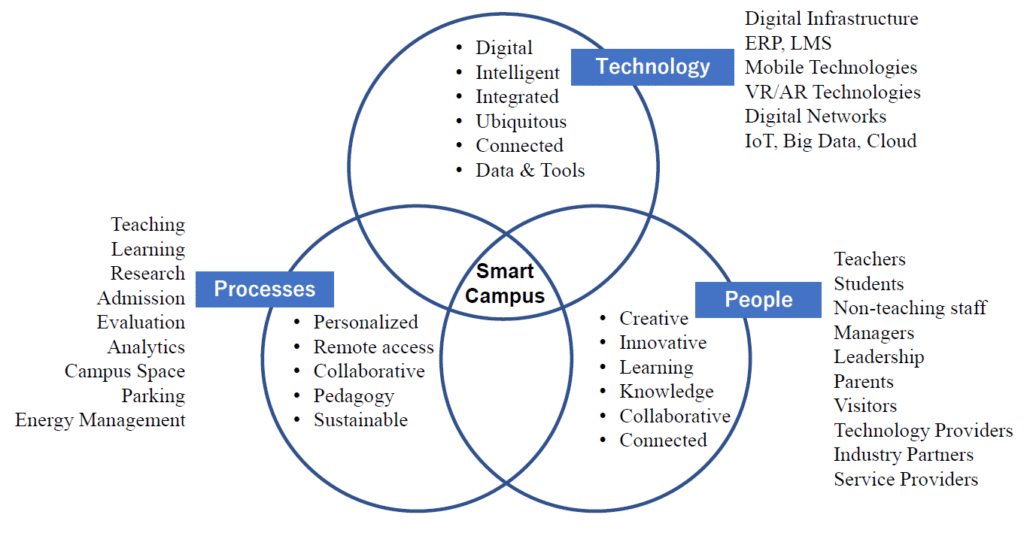
While the preceding courses focus on leveraging technology to enhance teaching and learning, digital transformation extends across the entire institution. This Campus Infrastructure section addresses the strategic, tactical, and operational frameworks necessary to modernize and support the entire campus value chain.
Digital Campus/Infrastructure Program
Modern educational institutions—from K-12 school districts to higher-education research universities—depend on resilient, flexible, and high-performance digital infrastructure. Designed for education technology leaders, campus IT directors, and superintendents/provosts, this course provides the strategic framework required to architect, manage, and defend a modern connected digital campus.
Participants step into the role of a Chief Information Officer or Education Technology Director to evaluate how cloud-native learning management systems, smart campus IoT devices, hybrid classrooms, and administrative platforms must be integrated into a secure, unified ecosystem. Given the escalating threat of ransomware, data breaches, and service disruptions targeting educational sector networks, the curriculum places special emphasis on moving beyond legacy perimeter defenses to implement Zero Trust Security and establish end-to-end Cyber Resilience.
Core Strategic Focus Areas
Next-Generation Campus Network Architecture: Designing hybrid, cloud-enabled campus networks, high-density Wi-Fi 6/7 coverage, SASE (Secure Access Service Edge), and edge computing for distributed, blended learning environments.
Zero Trust Security in Education (ZTNA): Enforcing identity-first access control (“never trust, always verify”), granular network microsegmentation, and context-aware policies across BYOD endpoints, guest networks, student records, and research data.
Cyber Resilience & Ransomware Defense: Building proactive threat-hunting mechanisms, automated incident response protocols, immutable data backup strategies, and disaster recovery models to ensure operational continuity during ransomware attacks or cyber outages.
Data Privacy & Regulatory Compliance: Safeguarding student personally identifiable information (PII) and research assets while navigating compliance requirements including FERPA, COPPA, CIPA, and GDPR.
Smart Campus & IoT Infrastructure Management: Integrating smart physical safety devices (IP surveillance, access control, environmental sensors), automated facility systems, and classroom audio/visual endpoints onto isolated, secure network segments.
Digital Inclusion & Cloud Infrastructure Governance: Managing multi-cloud education platforms (SaaS/IaaS), controlling cloud spend (FinOps), and ensuring equitable broadband and device access across hybrid and remote learner communities, especially Agentic AI.
Digital Education Enterprise & Campus Experience Systems
As educational institutions navigate evolving student expectations, operational complexity, and digital transformation, the alignment between front-office student experience platforms and back-office administrative systems has become paramount. Designed for educational technology executives, campus CTOs/CIOs, registrars, and administrative leaders, this course provides a strategic framework for selecting, modernizing, integrating, and governing the complete portfolio of campus applications.
Participants will explore how to deliver frictionless, personalized, and AI-enabled student experiences (front-office) while establishing resilient, automated, and cloud-native administrative operations (back-office). The course addresses the integration challenges of connecting legacy Student Information Systems (SIS) with modern enterprise platforms, leveraging Agentic AI for student support and administrative automation, and maintaining continuous Zero Trust data governance and Multi-Cloud Governance across multi-vendor SaaS and cloud applications.
Key Focus Areas & Topics
Front-Office Student Experience Platforms: Next-Generation Student Portals, Mobile Campus Apps, AI-Powered Student Success & Retention Dashboards, and Personalized Learning Management Systems (LMS).
AI-Enabled Student Engagement & Agentic Services: Deploying Autonomous AI Agents for 24/7 Admissions Guidance, Financial Aid Advisory, Course Registration, and Automated Academic Advising.
Back-Office Enterprise Resource Planning (ERP) Modernization: Cloud-Native Systems for Finance, Human Resources, Procurement, Grants Management, and Facilities Operations in Educational Environments.
Student Information System (SIS) Integration & API Orchestration: Connecting Core SIS Registries, Degree Audit Platforms, and Alumni/Advancement Engines to Distributed SaaS Solutions.
Data Privacy, Zero Trust & Student Data Governance: Protecting Student Records (FERPA, COPPA, GDPR Compliance), Identity-First Access Governance across Front/Back Office Portals, and Ethical AI Data Policies.
Multi-Cloud SaaS Governance & Operational Automation: Managing Multi-Vendor Application Ecosystems, Controlling SaaS Renewal/FinOps Costs, and Implementing Robotic Process Automation (RPA) for Administrative Workflows.
As education organizations accelerate the digital transformation of their industry, they are focusing their investments in leveraging information technology to improve student outcomes, improve the quality of programs and research, and lower overall costs. In today’s highly regulated, increasingly resource-constrained, and cost-focused environment it is essential to understand how to manage an organization’s information technology (IT) resources effectively and efficiently. There are numerous strategic, tactical, and operational choices to be made about managing Education IT resources and it is essential to ensure that IT and non-IT executives across the organization work in harmony.
Experience has made it clear that education organizations need well-conceived organizational structures, skills, processes, and decision rights to ensure that IT investments are appropriately leveraged across the organization, especially when considering the impact of emerging information technologies.
This course prepares education executives/professionals by providing a comprehensive understanding of the fundamental decisions related to the management of IT resources in the education environment. The course will also provide an overview of current and future relevant education information technologies and their potential impact on students, faculty, administrative organizations, and associated stakeholders. The focus will be on leveraging AI and the successful deployment of AI initiatives in education.
The course is designed to be delivered live/synchronously (face-to-face or online) with a total of twenty (20) contact hours. While the schedule is flexible, it is usually delivered in approximately eight (8) 2.5-hour modules/lectures/sessions.
The IT-Education topics/sessions include:
A. Sessions 1-2; COURSE INTRODUCTION & IT-BUSINESS MANAGEMENT
Deriving IT-business strategies
Enhancing business-IT alignment
The business value of IT
Governance (i.e., decision-making and decision rights)
Considerations for types of organizational structure & sourcing
Managing emerging technologies
Sessions/topics addressing the specific definition, concepts, and contexts of Education IT & leverage emerging digital/AI technologies in academic processes:
B. Sessions 3-4; ACADEMIC & LEARNING SUPPORT
Adaptive Learning
Special needs students access a more equitable education
Deploying a Universal Design for Learning (UDL) framework to help educators create inclusive learning environments by addressing the diverse needs of all students.
Early Childhood Education
Writing: helping students improve their writing skills
Lesson Planning
Language Learning
Test Prep
C. Sessions 5-6; SCHOOL MANAGEMENT
Classroom/Behavior Management
Classroom Audio-Visual
Student- Parent-Teacher Communication
Student, Faculty, & Staff Assessment
Learning Management Systems
Gamification for Enhanced Student Engagement
Staff Scheduling and Substitute Management
Professional Development
Transportation
Building and Equipment Maintenance and management (e.g., power, Wi-Fi and water services)
Finance & Budget Management
Cybersecurity
Safety and Security
Records Management
Scheduling
Alumni Management
D. SESSIONS 7-8 HIGHER EDUCATION
Plagiarism Detection
Exam Integrity
Chatbots for Enrollment and Retention
Learning Management Systems vs Learning Experience Platforms and emerging technologies
Transcription of Faculty Lectures
Enhanced Online Discussion Boards
Analyzing Student Success Metrics
Academic Research
Connected Campuses

We offer the flexibility to integrate courses from other programs with a tailored focus on the Education Sector.