Digital Marketing Programs
Digital marketing is now a core driver of customer value, growth, and competitive advantage. To lead it effectively, organizations need marketing professionals who understand technology and technology professionals who understand marketing.
GIIM’s two (2) Digital Marketing Programs develop the strategic, analytical, and collaborative capabilities needed to turn digital technologies, including Agentic AI, data and analytics, social platforms, connected devices, and marketing automation, into measurable business results.
Choose one of the two (2) four-course programs/certificates designed for your background and objectives:

- Digital Marketing for IT Professionals – learn the language, priorities, and operating practices of modern marketing so you can be a stronger strategic partner to the business.
- Digital Marketing for Marketing Professionals – build the digital, data, and technology fluency needed to lead effective marketing in partnership with IT.
Both programs are available live, in person, or online, and can be customized based on your objectives.
These two 4-course customized programs (described below) prepares IT professionals and non-IT executives to lead at the intersection of marketing and digital technology. Participants will learn to:
- Connect customer, brand, channel, data, and technology decisions to business strategy across the full marketing value chain through emerging digital technology (especially Agentic AI)
- (IT track) Build a foundation in digital marketing, experiential marketing, community/account-based marketing, and performance measurement
- (Non-IT track) Apply marketing intelligence systems, consumer behavior and ethics, market research, and relationship marketing
- Use AI, analytics, and marketing automation to improve decisions, personalization, and omnichannel customer experience
- Evaluate marketing performance, ROI, and responsible marketing practices, applying learning to a real organization or challenge

The entire marketing value chain is addressed
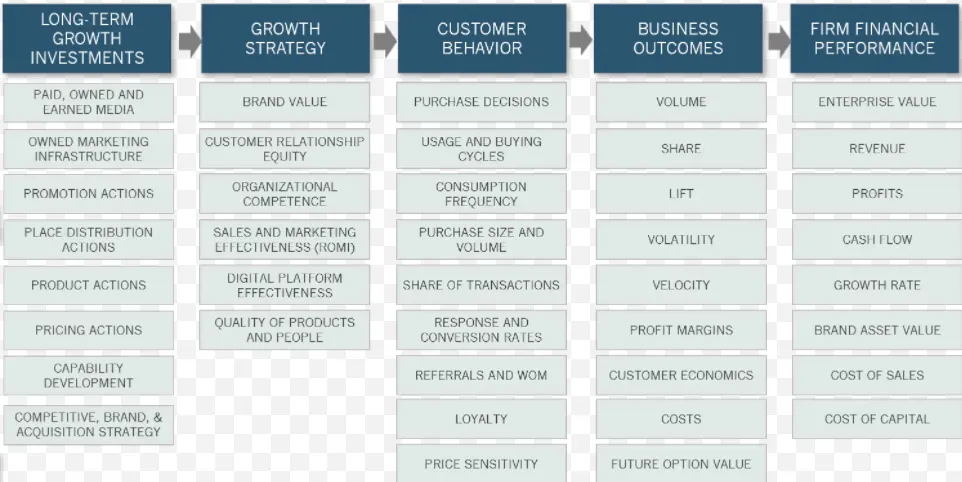
Across the marketing value chain, participants learn to:
- connect customer, brand, channel, data, and technology decisions to business strategy
- use market intelligence and customer insight to improve decisions
- design digitally enabled customer experiences and engagement
- collaborate effectively across marketing, IT, data, sales, and external partners
- evaluate performance, value creation, return on investment, and responsible marketing practices
- apply learning to a real organization or business challenge.
I. Digital Marketing Certificate For the IT Professional
Designed for technology leaders, architects, and managers who need to understand how modern marketing operates, what it demands from IT, and how to align technology strategy and marketing objectives to drive organizational growth.

1. Digital Marketing
Develop a practical foundation in contemporary digital marketing without requiring prior marketing education. Explore customer and market insight, direct marketing principles, channel strategy, search, social media, email, mobile, websites, and the operating practices that support agile marketing.
Participants examine how AI (Agentic AI), analytics, data, connected technologies, and automation enable marketing performance – and how IT and marketing must work together to create value. The course emphasizes application to an organization of the participant’s choice, with attention to measurable outcomes and return on investment.
2. Experiential Marketing
Learn how organizations create distinctive, engaging customer experiences across physical and digital touchpoints. Topics include brand positioning, customer insight, segmentation, research, content and experience design, and interactive digital channels.
Participants consider how technologies such as AI, analytics, data platforms, connected devices, and marketing automation support innovative experiences. The course focuses on the partnership between IT and marketing required to turn compelling ideas into scalable, measurable initiatives.
3. Community Marketing & Account Based Marketing
Explore two powerful approaches to growth: building communities of interest and engaging high-value business accounts. In account-based marketing, participants examine account assessment, segmentation, selection, brand building, and lead generation, management, and tracking.
In community marketing, the course addresses word-of-mouth, community building, digital communications, corporate social responsibility, and the tools that enable sustained engagement. Throughout, participants evaluate how technology and measurement improve marketing effectiveness.
4. Marketing Performance Measurement & Sustainability Marketing
Marketing investment should create sustainable value for customers, the organization, and its stakeholders. This course examines how to set meaningful objectives, select performance measures, assess campaign and customer value, and communicate marketing’s contribution to business performance.
Participants explore the IT professional’s role in the planning, data, governance, and monitoring practices needed to improve marketing decisions over time.
II. Digital Marketing Program For the Non-IT Professional
Designed for non-IT executives, including marketing leaders, strategists, and practitioners, who need to master the technologies reshaping modern business. From AI-driven personalization and predictive analytics to marketing automation, data governance, and seamless omnichannel platform strategy, this program builds the digital fluency required to lead transformation and deliver a unified customer experience across every touchpoint.

1. Marketing Intelligence Systems
Effective marketing decisions depend on timely, relevant insight about customers, competitors, and market trends. Learn how data, analytics, dashboards, AI (Agentic AI), and marketing intelligence systems can support better decisions and competitive advantage.
The course examines the use of internal data and external research sources to define and monitor meaningful performance indicators. Participants also consider the collaboration, governance, and technology choices required to make insight actionable.
2. Consumer Behavior & Marketing Ethics
Digital platforms and intelligent technologies have fundamentally altered how customers discover, evaluate, and build relationships with brands. This course explores the modern, multi-touchpoint customer journey—examining the behavioral psychology, user experience (UX) principles, and data-driven insights that shape consumer decision-making today.
Designed for non-technical executives, the course demystifies the ethical, regulatory, and governance challenges of modern marketing. Leaders will navigate critical topics—including data privacy, Agentic AI, personalized marketing, and location-based targeting—while gaining a practical understanding of Cyber Resilience and Zero Trust frameworks needed to safeguard customer data and protect brand reputation. The core focus is on building long-term consumer trust while driving measurable business value.
3. Digital Marketing & Market Research
Build the research and channel skills needed to design evidence-based digital marketing. Topics include online surveys, online communities, keyword research, social listening, audience profiles, and the application of analytics, data, and AI.
Participants translate insight into effective approaches across search, social media, email, mobile, and web channels. The course emphasizes productive collaboration with IT and measurable return on marketing investment.
4. Relationship Marketing
Learn how to build and deepen valuable relationships with customers, prospects, and partners in both consumer and business markets. The course connects relationship-marketing principles with digital communications, marketing automation, personalization, and performance measurement.
Participants evaluate how technology can support relevant, responsible engagement and how to assess the business impact of relationship-marketing initiatives.
Additional Optional / Marketing Elective Course:
Strategic Marketing Foundations
This elective provides a practical grounding in the tools and processes used to strengthen competitiveness in organizations of all sizes. It considers marketing through a digital and technology-enabled lens.
Learning Outcomes
By the end of the course, participants will be able to:
– explain marketing’s role in organizational strategy and value creation;
– assess the elements of the marketing mix in different markets and industries;
– select appropriate marketing tools for a specific organizational context;
– develop an effective marketing strategy for a business scenario; and
– communicate that strategy clearly in writing and orally.
Core Topics
– Marketing fundamentals
– Market research and customer insight
– Consumer behavior
– Segmentation, targeting, and positioning
– The 4Ps and 7Ps of marketing
– Strategic marketing
Individual customized course for senior level executives
GIIM can tailor a senior-executive program for organizations seeking to align marketing, technology, data, and business strategy. The program helps leaders make informed decisions about the technologies, operating model, governance, skills, sourcing, and investments that shape marketing performance.
Potential topics include:
– aligning business, marketing, and technology strategy
– marketing-technology operating models, roles, decision rights, and governance (including Multi-Cloud Governance)
– applying emerging digital technologies (especially Agentic AI ) to customer value and growth
– assessing the business value of marketing technology investments; and
– strengthening marketing-IT alignment across the enterprise