CTO Certification
(Integrating IT Infrastructure Program)
Today’s Chief Technology Officers (CTOs) must navigate a landscape where AI adoption and emerging technologies are rapidly outpacing legacy infrastructure. This certificate equips senior technology leaders with the strategic foresight and operational expertise to architect, scale, and govern modern enterprise systems.
Rather than simply managing IT operations, the curriculum focuses on building resilient, future-ready technology platforms that drive business innovation while maintaining structural stability.
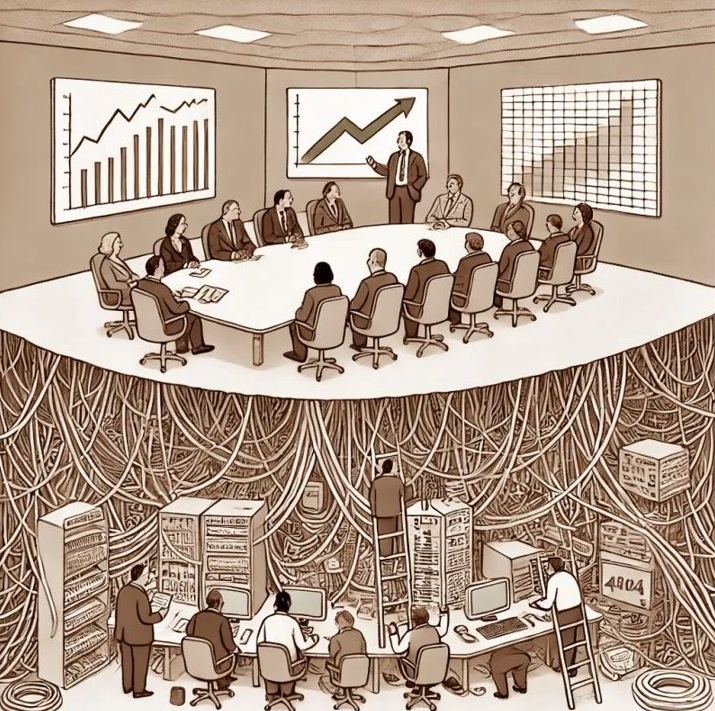
This customized program equips senior technology leaders to architect, scale, and govern modern enterprise systems built for resilience and business innovation. Participants will learn to:
- Apply Enterprise Architecture principles to integrate IT infrastructure and cloud within an overall business-IT strategy
- Implement cloud-capable data centers and enterprise systems management, including mainframe/large-cluster architectures and TCO analysis
- Establish security and continuity planning foundations, and manage networks across next-generation (5G and beyond) standards
- Evaluate Green IT practices for sustainable, energy-efficient infrastructure amid growing AI compute demands
- Assess the business implications and current state of quantum computing for future enterprise applications

Select at least 4 courses from the following:
Information Technology Management or its equivalent.
1. Enterprise Database Management & Data Infrastructure
As every enterprise transforms into an AI-driven, real-time digital business, the underlying database infrastructure serves as the critical backbone for both operational transaction processing and strategic decision-making. Designed for technology executives and IT leaders, this course focuses on the infrastructure, architectural design, and operational considerations required to deploy, scale, and govern modern enterprise database systems.
Participants will explore the trade-offs and integration strategies between traditional relational databases (ACID-compliant) and modern distributed architectures—including NoSQL, NewSQL, Graph, and Vector databases optimized for enterprise AI and real-time analytics. The course equips leaders to make high-impact decisions regarding multi-cloud database deployment, real-time data integration, high availability, storage optimization, and automated data governance without getting bogged down in low-level syntax.
Key Focus Areas & Topics
Enterprise Database Architectures: Relational (RDBMS) vs. NoSQL, NewSQL, Graph, and Vector Databases for Modern Workloads & AI
Cloud & Hybrid Data Infrastructure: Multi-Cloud Managed Databases, Serverless Data Layers, Storage Engine Optimization, & Infrastructure Sizing
High Availability & Disaster Recovery: Data Replication Paradigms, Active-Active Clustering, Failover Strategies, & Zero-Data-Loss Architectures
Database Performance & Optimization: Real-Time Streaming Ingestion (Kafka/Event Streams), Indexing Strategies, & Query Performance at Scale
Security, Privacy, & Governance: Enforcing Zero Trust at the Data Layer, Encryption (at Rest & in Transit), Access Management, & Regulatory Compliance
Data Lifecycle & Operations: Automated Backups, Schema Migration, Database DevOps (CI/CD for Data), & Database Infrastructure Cost Optimization (FinOps)
2. Enterprise Architecture
To maximize business performance, modern technology must function as an engine of competitive advantage rather than a supporting utility. Designed from the perspective of the Chief Information Officer, this course positions leaders to treat Enterprise Architecture (EA) as the connective tissue between business vision, cloud infrastructure, and operational execution.
This course immerses participants in the role of the CIO, focusing on how to architect, govern, and scale technology investments. Special emphasis is placed on navigating complex, multi-cloud environments—addressing the strategic and operational choices required to build an agile, cloud-enabled enterprise while maintaining cross-functional alignment across IT and business leadership.
Executive Learning Outcomes
Business-IT Strategy Alignment: Formulate holistic enterprise strategies where IT serves as a primary driver of business value and growth.
Modern Cloud Architecture & Strategy: Navigate the strategic, tactical, and operational considerations of orchestrating high-impact enterprise cloud environments.
Strategic IT Governance & Value Realization: Design robust governance frameworks, performance metrics, and decision rights to maximize return on technology investments.
Emerging Technology Leadership: Assess, select, and integrate disruptive technologies into the enterprise architecture without increasing systemic risk.
Organizational Design & Sourcing: Structure modern IT organizations, optimize human capital, and manage strategic vendor/sourcing relationships.
The Evolving Role of the CIO & CTO: Master executive communication, strategic leadership, and stakeholder management to lead digital transformation from the board level down.
3. Integrating IT Infrastructure & Cloud
Modernizing IT infrastructure is no longer just an operational upgrade—it is a foundational requirement for business agility, AI readiness, and continuous innovation. Taught from the perspective of the Chief Technology Officer and Chief Information Officer, this course prepares executives to architect, integrate, and manage resilient IT infrastructure and multi-cloud strategies that directly power enterprise goals.
Participants step into the role of the CTO/CIO to examine how hybrid, multi-cloud, edge, and legacy systems must be harmonized to deliver high performance, scalability, and seamless interoperability. The curriculum bridges technical execution with executive leadership, focusing on how to govern complex cloud ecosystems, manage strategic vendor partnerships, enforce continuous security, and align modern infrastructure investments with overall business strategy.
Core Strategic Focus Areas
Infrastructure & Cloud Integration: Architect hybrid, edge, and multi-cloud environments that integrate seamlessly with core legacy systems to drive operational agility.
Zero Trust & Infrastructure Security: Enforce identity-first Zero Trust architecture across distributed multi-cloud endpoints, network segments, and hybrid workloads to minimize threat exposure.
Strategic IT Governance & FinOps Value Delivery: Establish robust governance models, operational controls, and FinOps practices to optimize cost structures and ensure cloud investments deliver measurable business ROI.
Modern IT Operations & Resilience: Optimize infrastructure service delivery, automated DataOps/DevOps pipelines, disaster recovery, and operational resilience across hybrid IT environments.
Sourcing, Talent, & Partner Ecosystems: Navigate complex vendor landscapes, manage Cloud Service Providers (CSPs), and align internal talent skill sets with modern cloud infrastructure demands.
Emerging Infrastructure Technologies: Evaluate the strategic impact of Generative/Agentic AI workloads, edge computing, automation, and next-generation cloud architectures on enterprise capability.
Cross-Functional Executive Alignment: Drive collaboration between technical teams and business leadership to ensure infrastructure choices directly enable enterprise growth and digital transformation.
4. Implementing the Cloud Capable Data Center
Modernizing physical and virtual data center infrastructure to seamlessly integrate with cloud environments is a critical step in enterprise digital transformation. Designed from the perspective of the Chief Information Officer, this course addresses how to strategically evolve, scale, and govern data center architectures to deliver cloud-like agility, resilience, and efficiency.
Participants will adopt the mindset of a technology executive evaluating the transition toward software-defined environments, hybrid architectures, and high-performance computing readiness. The curriculum bridges infrastructure strategy with business value, equipping leaders to manage the capital investments, operational risks, and cross-functional alignment required to build a modern, cloud-capable data center.
Core Strategic Focus Areas
Data Center Modernization & Cloud Integration: Bridge physical data center operations with hybrid and private cloud models to achieve software-defined agility, automation, and scalability.
Capital & Operational Strategy (CapEx vs. OpEx): Evaluate total cost of ownership (TCO), capacity planning, and resource optimization across modernized enterprise data centers.
Strategic Governance & Operational Resilience: Establish governance frameworks, security controls, disaster recovery protocols, and business continuity plans tailored to hybrid data center environments.
Sourcing, Talent, & Infrastructure Operations: Manage co-location, hardware vendors, and service providers while evolving internal staff capabilities for software-defined infrastructure.
Emerging Data Center Technologies: Assess the impact of edge computing, high-density workloads, cooling innovations, and AI-driven automation on data center design.
Executive Leadership & Business Alignment: Direct cross-functional strategies that align data center performance, security, and scalability with broader enterprise business goals.
5. Continuity Planning
For a Chief Technology Officer, business continuity extends far beyond standard disaster recovery plans—it is an architectural requirement designed directly into the enterprise tech stack. As systems become increasingly interconnected, continuous availability, fault tolerance, and rapid recovery are vital to protecting revenue, trust, and operational integrity.
Designed from the executive perspective of the CTO, this course equips technology leaders to architect, govern, and execute end-to-end technical continuity strategies. Participants will evaluate high-availability system designs, multi-region cloud resilience, disaster recovery automation, and incident response frameworks to ensure the enterprise can withstand and swiftly recover from major outages, cyber threats, and infrastructure failures.
Key Executive Focus Areas
Architectural Resilience & High Availability: Design fault-tolerant, self-healing multi-cloud and hybrid architectures that minimize single points of failure and meet aggressive RTO and RPO metrics.
Cyber Resilience & Incident Response: Integrate technical continuity with cybersecurity, establishing automated recovery protocols for ransomware attacks, breach isolation, and data corruption scenarios.
System Dependency & Supply Chain Mapping: Analyze complex microservices, third-party APIs, and vendor ecosystems to identify hidden technical risks and critical path vulnerabilities.
Automated Disaster Recovery (DR) & Chaos Engineering: Implement continuous DR testing, automated failover mechanisms, and resilience engineering practices to validate recovery readiness without business disruption.
Governance, Compliance, & Crisis Leadership: Establish cross-functional technical governance, align technical continuity with regulatory standards, and lead engineering teams effectively through high-impact outages.
6. Leadership & Management in the Cloud
Leading a modern technology enterprise requires a fundamental shift from managing rigid infrastructure to steering dynamic, cloud-first organizations. Designed from the perspective of the Chief Information Officer, Chief Technology Officer, and executive leadership, this course focuses on the human, structural, and cultural dimensions of leading high-performing teams through continuous cloud evolution.
Participants will assume the role of the CIO/CTO to master the art of leading cloud transformation. The course goes beyond technology to explore organizational design, talent upskilling, cross-functional collaboration, vendor management, and the leadership frameworks required to build an agile, cloud-ready culture that aligns IT execution directly with business strategy.
Core Strategic Focus Areas
Cloud-First Executive Leadership: Define the CIO/CTO role as a strategic business leader driving digital vision, change management, and cross-executive alignment across the C-suite.
Organizational Design & Talent Modernization: Restructure IT organizations to support cloud-native operating models (DevOps, FinOps, Agile), while addressing skill gaps through targeted upskilling and talent retention strategies.
Culture & Change Management: Overcome organizational inertia, eliminate operational silos, and foster a culture of continuous innovation, accountability, and psychological safety.
Governance, FinOps, & Value Delivery: Align organizational roles with financial accountability to optimize cloud spend, track business value, and maintain operational governance.
Strategic Sourcing & Partner Management: Build and manage high-performing relationships with cloud providers, managed service partners (MSPs), and external talent pools.
Cross-Functional Business Engagement: Bridge the divide between technical teams and non-IT business units to ensure cloud initiatives deliver measurable business agility and outcomes.
7. Managing IT Resources
As firms engage in the digital transformation and focus their investments in leveraging information technology for competitive advantage and performance improvements, it is essential to understand how to effectively and efficiently manage their information technology resources. There are numerous choices to be made about managing IT resources and it is essential to ensure IT and non-IT executives across the firm work in harmony.
Experience has made it clear that firms need well-thought out organizational structures, skills, processes, and decision rights to ensure that the decisions about how to leverage IT investments are well thought out and integrated across the enterprise. This course will help candidates understand the fundamental decisions related to the management of IT resources and the types of organizational structures, sourcing, governance, and processes that will help effectively and efficiently attain value to the enterprise. It concentrates on developing the candidates’ competency in current/emerging issues in creating and coordinating the key activities necessary to manage the day-to-day tactical and operational IT functions of an enterprise, as IT becomes ingrained in all aspects of the business.
Topics include:
- Enhancing IT-business alignment
- Strategic, Tactical, and Operational IT governance practices
- Improving IT’s key business processes
- IT organizational structure alternatives
- Demonstrating the value of IT
- Evolving role of the CIO
- Trends in sourcing/outsourcing
- Sustaining systems integration
- Managing emerging technologies and change
- Human resource and skills considerations
8. Security Systems (Select from Cyber Security )
Cybersecurity has evolved from a back-office IT function into a core pillar of corporate strategy and enterprise risk management. For today’s Chief Technology Officer (CTO), technical acumen alone is no longer enough—executives must possess the strategic oversight required to safeguard digital assets, maintain customer trust, and navigate an increasingly complex regulatory landscape.
Why Cybersecurity Mastery is Essential for Modern CTOs
Strategic Risk Mitigation: Cyber threats represent significant operational and financial liabilities. A modern CTO must bridge the gap between high-level business strategy and technical defense mechanisms to protect the enterprise from catastrophic data breaches.
Governance and Compliance Leadership: Global regulatory frameworks continue to tighten. CTOs must design and enforce robust data privacy architectures that align with international standards, ensuring compliance while enabling business agility.
Architectural Resilience: Integrating security into the core system architecture—rather than treating it as an afterthought—is critical for modern digital transformation, cloud migrations, and product development lifecycles.
Crisis Management and Reputation: When security incidents occur, the CTO leads the technical response. Proactive cybersecurity training equips executives to handle incident response with speed, transparency, and minimal disruption to brand integrity.
Mastering cybersecurity ensures that CTOs can confidently lead cross-functional teams, protect organizational value, and position security as a competitive differentiator in a digital-first economy.
9. Service Thinking
Service Thinking is the set of principles, methods, and tools for the application of science, management, and engineering principles to services – tasks that the organization performs for others. Service Thinking guides the transition of the organization that occurs when the business focus is on the customer’s experience.
Design thinking is a process for creative problem solving. Rather than a one-size-fits-all mindset, it encourages a holistic view where uncertainty and ambiguity are welcomed and embraced to consider all sides of a problem. A design mindset can be applied to any life situation, and it aids in considering the bigger picture and acting accordingly. Design Thinking and Innovation will teach you how to leverage fundamental design thinking principles and innovative problem-solving tools to address business challenges and build products, strategies, teams, and environments for optimal use and performance.
10. Network Management & Next-Generation Communications
Responding to the accelerating worldwide demand for resilient, high-speed, and secure communications infrastructure, this course offers a comprehensive panorama of modern network principles, architectures, emerging trends, and international standards. Designed for executive technology leaders, this course addresses the strategic opportunities and operational challenges facing rapidly expanding global enterprises across multi-cloud and edge environments.
Participants step into the role of a communications leader navigating global regulatory environments, carrier partnerships, and critical architectural decisions. The course covers next-generation wireless paradigms—including 5G and beyond (6G), Open RAN (ORAN), and software-defined networking (SDN)—alongside modern security frameworks like Zero Trust Network Access (ZTNA) and Secure Access Service Edge (SASE). Candidates will gain the strategic and technical expertise required to manage high-performance communications networks, guarantee service level agreements (SLAs), and protect distributed enterprise endpoints.
Key Focus Areas & Topics
Next-Generation Communications Architecture: 5G, 6G & Beyond, Open RAN, Radio Resource Management, & Software-Defined Networking (SDN/SD-WAN)
Zero Trust Network Access (ZTNA) & SASE: Enforcing Identity-Centric Access Controls, Least-Privilege Network Microsegmentation, & Perimeterless Security
Global Network Industry & Regulatory Governance: Navigating International Telecommunications Standards, Spectrum Allocation, & Compliance Frameworks
Performance Management & Quality of Service (QoS): Network Slicing, Real-Time Edge Analytics, Bandwidth Optimization, & Latency Management
Network Continuity & Disaster Resilience: High-Availability Network Design, Carrier Redundancy, Automated Failover, & Cyber Resilience
Mobile & Edge Computing Integration: Securing IoT/OT Connectivity, Mobile Device Management (MDM), & Distributed Cloud Edge Workloads
11. Integrating IT Technologies, Systems & Services
This course provides a strategic, architecture-first approach to designing, connecting, and governing complex enterprise ecosystems. Moving beyond isolated, self-contained infrastructure, modern corporate systems depend on seamless interoperability between legacy transaction engines, high-performance Linux/GPU clusters, hybrid cloud services, and edge devices. Technology leaders will learn how to evaluate and connect these foundational building blocks into a unified, high-performance architecture that solves scale, performance, and reliability challenges for global enterprises.
Participants will explore the evolution of enterprise computing—analyzing the strengths, trade-offs, and integration strategies for mainframes, large-scale Linux/AI computing clusters, microservices, and distributed cloud workloads. The curriculum emphasizes executive decision-making in systems integration, modern API orchestration, real-time data flows, and zero-trust security controls across heterogeneous environments.
Key Focus Areas & Topics
Enterprise Architecture Frameworks: Designing Scalable, Interoperable, & Module IT Architectures Across Hybrid Environments
Heterogeneous Systems Integration: Connecting Legacy Enterprise Core Systems, High-Performance Linux/GPU Clusters, & Cloud-Native Services
Modern API Orchestration & Middleware: Event-Driven Architectures, Microservices Wrapping, & Real-Time Data Integration Pipelines
High-Performance & Cluster Computing: Evaluating Emerging Compute Paradigms, GPU/Linux Cluster Orchestration, & AI/Analytics Workloads
Zero Trust & Multi-Cloud Governance: Securing Cross-Platform Data Pipelines, Identity-First Microsegmentation, & Managing Multi-Cloud Interoperability
Systems Resilience & Performance Optimization: Service Level Management, TCO Analysis, Scalability Benchmarking, & Business Continuity Alignment
12. Enterprise Systems Management & Modern Hybrid Architecture
This course provides a strategic, executive-level survey of core Enterprise Systems management—examining how mission-critical, high-availability transaction engines (including mainframes, enterprise servers, and legacy cores) integrate into modern cloud ecosystems. Moving beyond isolated server management, the course adopts a modern architectural perspective to explore how enterprise systems serve as the resilient backbone for global commerce, high-volume processing, and enterprise AI workloads.
Participants will evaluate the strategic management of high-performance enterprise platforms, balancing operational reliability with modernization. The curriculum highlights how to enforce Zero Trust security postures across legacy and cloud environments, manage hybrid cost models via Multi-Cloud Governance, and calculate Total Cost of Ownership (TCO) and Business Continuity ROI. Technology leaders will analyze enterprise case studies to navigate system modernization, hybrid integration, data synchronization, and workforce succession planning.
Key Focus Areas & Topics
Modern Enterprise Core Architectures: Mainframe Systems, High-Performance Enterprise Servers, Hybrid Integration, & API Enablement
Zero Trust Security & Identity Control: Identity-First Access Governance, Microsegmentation, Encrypted Data Pipelines, & Mainframe-to-Cloud Access Management
Multi-Cloud Governance & Enterprise FinOps: TCO Analysis, Workload Placement Strategies, Multi-Cloud Cost Optimization, & Legacy-to-Cloud Economics
High Availability & Downtime Mitigation: Minimizing Cost of Downtime, Business Continuity Planning, Disaster Recovery, & Extreme Scalability
Modernization & Systems Integration: Mainframe Refactoring, Data Synchronization, Microservices Wrapping, & Cloud Interoperability
Enterprise Talent & Strategic Workforce Planning: Succession Planning, Mainframe/Legacy Skill Modernization, & Managing Specialized IT Engineering Teams
13. Sustainable Tech Leadership: Green IT & ESG Strategy
As enterprise AI adoption expands and modern infrastructure scales, the energy footprint of technology has become a central strategic risk and business priority. Managing hyperscale data centers, high-density computing workloads, and sprawling IT supply chains requires technology leaders to balance rapid technological innovation with environmental sustainability and regulatory compliance.
This course equips technology executives and managers with the frameworks needed to architect, deploy, and govern sustainable IT operations. Participants will learn how to measure the environmental impact of their technology stack, optimize power consumption across cloud and on-premises environments, reduce e-waste, and establish actionable Green IT policies that drive measurable ESG (Environmental, Social, and Governance) value.
Key Executive Competencies
Candidates will demonstrate practical mastery of Green IT concepts, strategies, and implementation frameworks, including:
The Modern Green IT Landscape: Navigating global sustainability standards, ESG reporting frameworks, regulatory compliance, and the broader business case for sustainable technology.
AI & High-Density Power Demands: Assessing and mitigating the environmental impact of AI model training, high-performance computing (HPC), and next-generation data center power requirements.
Green IT Strategy & Policy Development: Formulating enterprise-wide Green IT policies, governance structures, and strategic action plans aligned with corporate sustainability goals.
Sustainable Architecture & Infrastructure: Leveraging energy-efficient hardware, virtualization, sustainable cloud deployment models, dynamic cooling innovations, and renewable energy integration.
Measurement & Carbon Accounting: Implementing internal assessment techniques, metrics, and tools to measure data center PUE (Power Usage Effectiveness), cloud carbon footprints, and Scope 1–3 emissions.
Supply Chain & Lifecycle Management: Managing sustainable procurement, vendor assessment, extending hardware lifecycles, and implementing responsible e-waste recycling practices.
Stakeholder Alignment & Change Management: Defining roles, responsibilities, and key performance indicators (KPIs) to drive a culture of sustainability across business and IT units.
14. Quantum Computing: Strategic Vision & Technological Foundations
Digital computing has defined business transformation for decades, but quantum computing introduces a fundamental paradigm shift. Operating on the principles of quantum physics, quantum systems unlock exponential processing capabilities—solving complex optimization, simulation, and cryptographic problems that remain far beyond the reach of classical architectures.
Designed specifically for enterprise technology leaders, this course provides a comprehensive roadmap for navigating the quantum landscape. CTOs will evaluate current hardware and software maturity, assess the timeline toward fault-tolerant quantum supremacy, and formulate proactive strategies for integrating quantum capabilities into the enterprise tech stack.
Key Executive Takeaways
Strategic Readiness & Timeline Analysis: Evaluate the realistic horizon for enterprise quantum adoption—balancing immediate cloud-based experimentation with long-term infrastructure planning.
Hardware & Cloud Ecosystems: Analyze the competitive landscape of hyperscaler quantum environments (IBM, Google, AWS, Microsoft) and specialized hardware architectures driving toward high-qubit density.
Enterprise Use Cases: Identify high-impact applications across industry sectors, including advanced materials, drug discovery, complex supply chain optimization, and post-quantum cryptography.
Development & Tooling Foundations: Gain high-level visibility into quantum algorithm construction, programming paradigms, and the growing ecosystem of quantum software development kits (SDKs).
Vendor & Service Management: Navigate the emerging quantum consulting market, vendor partnerships, and hybrid classical-quantum cloud integration strategies.
Course Structure
Foundations of Quantum Mechanics & Computing: A conceptual breakdown of classical vs. quantum computing, core physics principles (superposition, entanglement), and algorithmic logic without requiring deep mathematical proofs or advanced coding.
Hardware Architectures & Production Milestones: The state of physical qubit development, error correction challenges, and the roadmap toward mass-scale execution.
Software Tools, SDKs, & Languages: Overview of developer toolkits, quantum programming environments, and enterprise software solutions.
Industry Impact & Strategic Roadmapping: Assessing sector-specific disruption, post-quantum security considerations, and enterprise preparation frameworks.