
Technical AI Courses

Most Popular AI Technologies:
- Generative AI
- Text & Image Generation: Tools like ChatGPT, DALL·E, and Midjourney remain top choices for creating content, visuals, and code.
- Generative Video: OpenAI’s Sora and Runway’s Gen-4 are pushing boundaries by turning text prompts into realistic video clips.
- Advanced Voice Assistants
- Next-Gen Conversational AI: Voice tools like ChatGPT’s interruptible voice mode and Google’s Gemini are making interactions more natural and human-like.
- Autonomous AI Agents
- Multi-step Reasoning & Task Execution: Platforms like CrewAI and LangGraph allow AI agents to collaborate and complete complex workflows without constant human input.
AI Frameworks & Developer Tools
- LangChain & LangGraph: Popular among developers for building custom LLM-powered apps with memory, chaining, and modular logic.
- Phoenix: Used for debugging and monitoring LLM behavior in real-time.
- AI in Cybersecurity
- Threat Detection & Response: AI tools like CrowdStrike’s Charlotte AI are automating defense against increasingly sophisticated cyberattacks.
- Responsible & Sustainable AI
- Ethical AI Development: Growing emphasis on transparency, fairness, and regulation—especially with new laws in the EU and China.
- Green AI: Efforts to reduce energy consumption in data centers and use AI to optimize sustainability across industries.
- Quantum AI (Emerging)
- Next Frontier: Quantum computing is beginning to intersect with AI, promising breakthroughs in medicine, materials science, and beyond
Most Popular Agentic AI Technologies:
1. Developer Orchestration Frameworks
These are open-source libraries that developers use to code, chain, and control autonomous agent workflows.
LangGraph (by LangChain): The current industry standard for complex, stateful production agents. It uses graph-based architectures to give developers precise control over loops, branching logic, memory persistence, and human-in-the-loop checkpoints.
CrewAI: Highly popular for role-based multi-agent systems. It allows you to set up “crews” of agents where each agent is assigned a specific role, goal, backstory, and toolset (e.g., a “Researcher” agent working alongside a “Writer” agent).
Microsoft AutoGen / AG2: A pioneer in conversational multi-agent systems. It enables multiple agents to talk to one another, write code, run terminal commands, and solve problems collaboratively.
LlamaIndex (Workflows): The go-to framework for document-heavy, retrieval-augmented (RAG) agents. It excels when agents need to dynamically index, search, and reason over unstructured enterprise data.
Pydantic AI & Mastra: Emerging, developer-favorite frameworks focusing on type safety, structured outputs, and seamless TypeScript/Python integration.
2. Platform SDKs & Provider Frameworks
Major AI vendors offer dedicated agentic SDKs tightly integrated into their cloud infrastructure.
OpenAI Agents SDK: Designed for building lightweight, scoped assistants with seamless multi-agent delegation and function calling using OpenAI models.
Microsoft Agent Framework / Semantic Kernel: Enterprise-grade frameworks built for the Microsoft/.NET ecosystem and Azure AI, offering enterprise governance and security guardrails.
Google Agent Development Kit (ADK): Opinionated runtime built for GCP-native applications, optimized for Gemini models and enterprise tool integration.
3. No-Code & Low-Code Workflow Automation
Visual platforms that allow teams to build and deploy agents without writing code.
Langflow / Flowise: Drag-and-drop UI platforms for visually assembling LangChain and LangGraph workflows.
n8n & Zapier: Popular workflow automation tools that have integrated agentic capabilities, allowing AI agents to trigger actions across thousands of enterprise SaaS apps (CRMs, Google Workspace, Slack, databases).
Relevance AI & Copilot Studio: Low-code enterprise environments for building autonomous task-oriented agents, customer support agents, and internal process tools.
4. Autonomous Developer & Productivity Agents
Turnkey agent applications designed to autonomously complete complex end-to-end tasks.
Cursor & Claude Dev (Cline): IDE-embedded coding agents capable of analyzing full codebases, proposing architecture, writing code across multiple files, running tests, and fixing terminal errors autonomously.
AutoGPT / Devin: Autonomous background agents that take a high-level goal, break it down into sub-tasks, browse the web, write code, and execute multi-step plans.
Behind the Scenes of AI
Top AI skills employers say are in high demand right now
- GenAI
- Applied machine learning
- PyTorch (machine learning library)
- Computer vision
- Reinforcement learning
- Machine learning
- Deep learning
- Supervised learning
- Artificial neural networks
- Machine learning operations (MLOps)
- Prompt engineering
- AI literacy
- Big data
- Critical thinking
- Analytical thinking
- Resilience
- Creative thinking
Examples of work-focused AI tools to include on your resume as technical skills include:
- ChatGPT
- HubSpot AI
- Semrush’s AI tools
- Superhuman
- Beehiiv
- Canva’s MagicDesign AI tools
- Copilot
Available Courses:
1. Exploratory Data Analysis with Python
Exploratory data analysis enables candidates to perform data health checks and gain initial insights from data. In this course, candidates will gain an understanding of Python programming basics and then cover the fundamentals of data management, descriptive statistics, and data visualization using Python.
Course Topics:
Python programming essentials
Data management in Python
Descriptive statistics
Data visualization with Python
2. Data Analytics with Excel and SQL
Excel and SQL are a fundamental part of a data analyst’s toolkit. A strong understanding of these tools also provides a basis for more advanced data analytics with other techniques and technologies. In this course, candidates will gain experience in collecting, processing, analyzing, and communicating with data using Excel and SQL.
Course Topics:
Excel functions
Data Analysis with Excel
Data management with SQL
3. Data Visualization with Power BI/ Tableau
Data visualization is a powerful way to communicate meaning in data while supporting business decision-making. This course will introduce candidates to the main commercial tools used in data visualization, such as Tableau, Excel, and Power BI. It will enable candidates to create a wide range of graphs, charts, and dashboards while using them appropriately in context. Candidates will also gain experience in interpreting data graphically and communicating findings effectively to a business audience.
Course Topics:
Business intelligence tools
Generate graphs and charts
Build dashboards
Interpret and communicate data visually
4. Statistics for Data Analytics
Statistical inference is the process of concluding data using statistical/mathematical techniques. This is at the core of data analytics and data science, and a strong understanding of statistics is an essential ingredient in a competent data analyst. In this course, candidates will cover the fundamentals of sampling, statistical distribution, hypothesis testing, and variance analysis, while applying Python code to carry out various statistical tests that derive business solutions from their output.
Course topics include:
Z-Test
Paired T-Test
Normal T-Test
Welch’s T-Test
Chi-Squared Test
Fisher’s Exact Test
Mann-Whitney U Test
ANOVA
Kruskal-Wallis Test
Pearson’s Correlation
Spearman’s Linear Regression
Simple Linear Regression
Multiple Regression
Logistic Regression
Factor Analysis
5. Fundamentals of Predictive Modelling
Solutions to many business problems are related to successfully predicting future outcomes. This course introduces candidates to predictive modelling and provides a foundation for more advanced methods/approaches/techniques. Candidates will gain an understanding of the general approach to predictive modelling while building simple linear regression, multiple linear regression, and logistic regression models in Python to apply their insights in a range of business contexts.
Course Topics:
Predictive modelling principles
Build regression models
Python for predictive modelling
6. Introduction to Machine Learning
In this course, candidates are introduced to fundamental concepts of machine learning, why machine learning is possible, and a range of real-world machine learning applications. Candidates will then cover common machine learning algorithms and use Python libraries to implement these techniques.
Course Topics:
Fundamental machine learning concepts
Machine learning algorithms
Business applications
Machine learning with Python

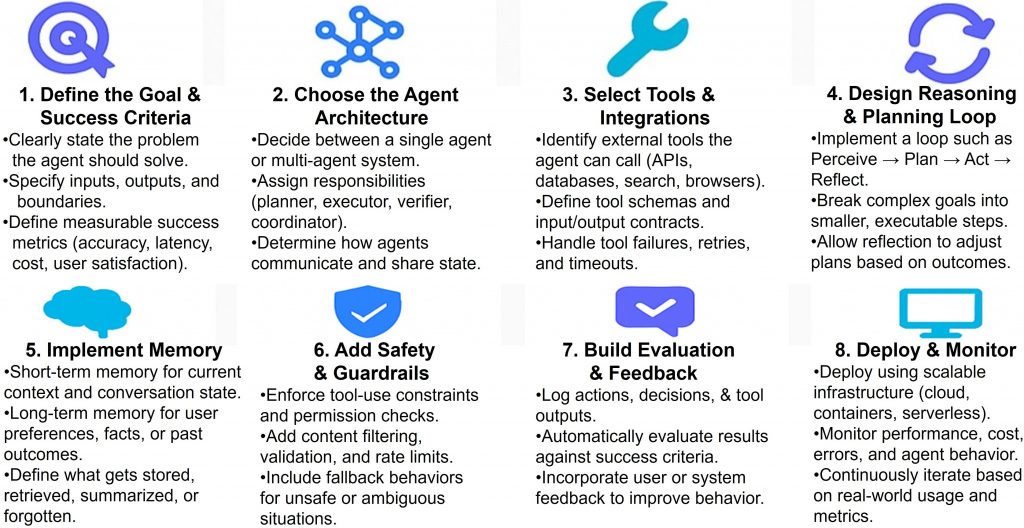
Steps to Build an AI Agent
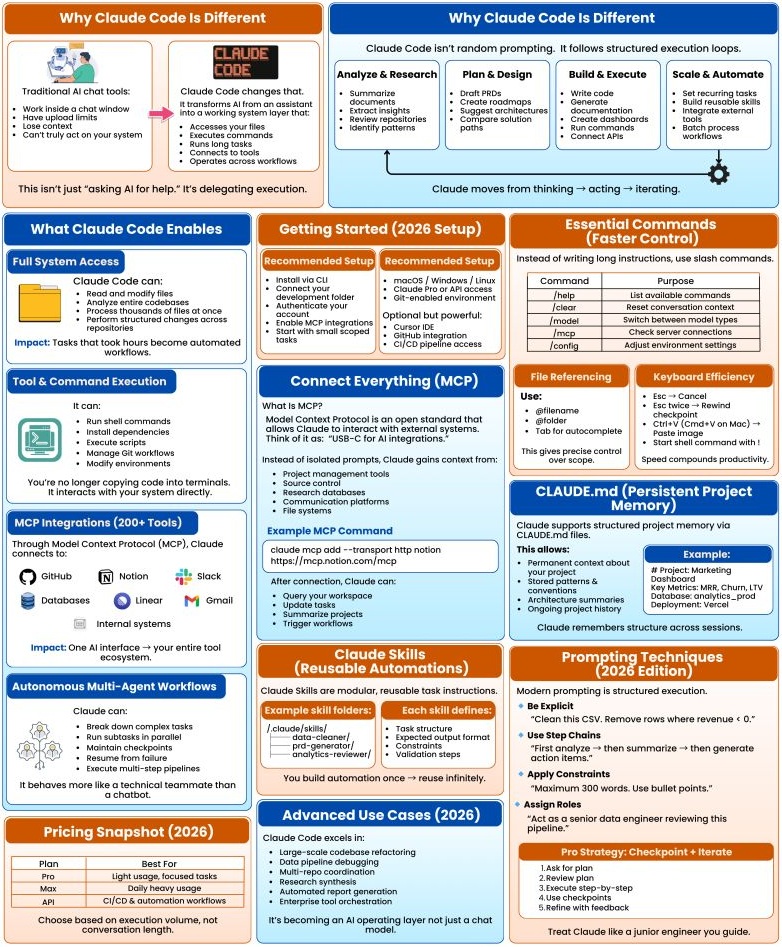
Claude Programming

The Entry-Level Python program (described above) or its equivalent is a prerequisite for this Advanced-Level Python program.
Advanced topics include:
a. Data Science with Python
b. Deep Learning with Python
c. Data Engineering with Python
d. Machine Learning with Python or R
e. NLP & Text Analytics with Python
f. Network Analysis with Python


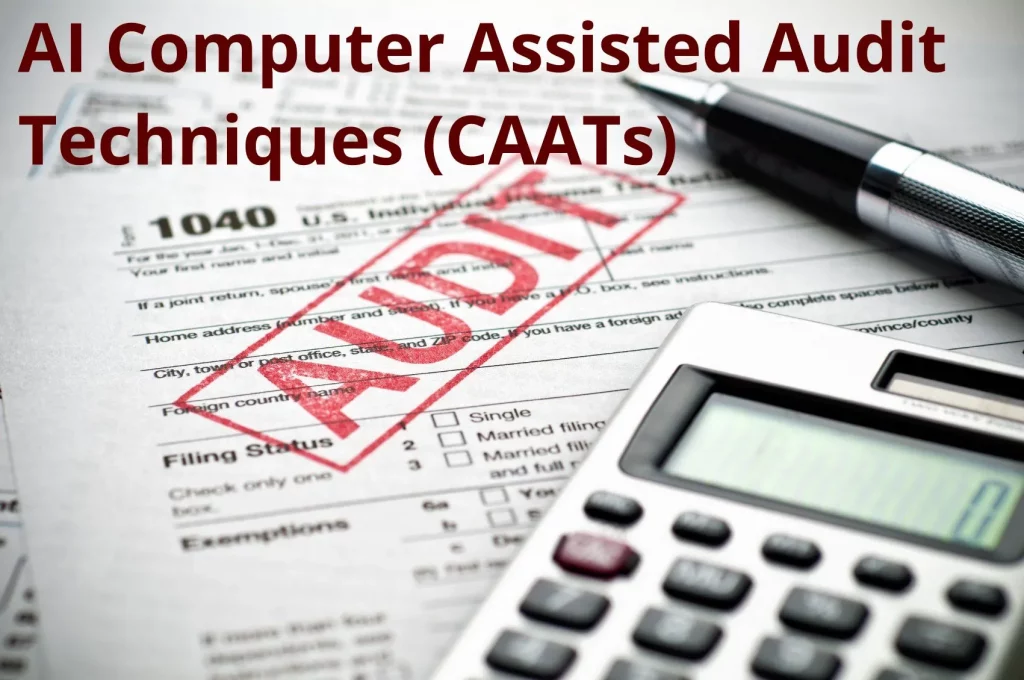
AI and machine learning are providing significant contributions to the efficiency and effectiveness of auditing (e.g., security, accounting, finance). This course, for both IT and auditing professionals, focuses on the application of AI to the essential practices employed by auditors to identify irregularities. Leveraging these AI auditing tools is enhancing the forensic analysis procedures used throughout every business and industry. Working with these tools enables auditors to select and analyze the right data to identify abnormalities. This course will prepare candidates on using Computer Aided Audit Tools (CAATs) such as ACL Robotics, Machine Learning, and Python to automate the auditing process. To visualize the results, visualization tools such as Tableau will also be covered.