Programming Courses
There are numerous popular programming courses available. GIIM will work with you to identify the most appropriate set of courses based on the candidates’ objectives and experience.
While GIIM’s primary focus is empowering senior leaders to drive digital transformation, effective leadership requires a deep, grounded understanding of the underlying technologies shaping modern business. Our hands-on technical tracks are purposefully designed as high-impact components within our broader Technical Leadership and Digital Management certificate pathways. These intensive modules provide the technical proficiency required to lead engineering teams, architect modern solutions, and make informed strategic decisions—serving either as targeted skill enhancements or as foundational stepping stones toward GIIM’s advanced executive credentials.

What is computer programming?
- Computer programming is the process of creating computer programs.
- A program is a set of instructions that tell a computer what to do.
- A program is created using a computer language.
- A programming language is a language that can be used to communicate with a computer. Therefore, a programming language is the equivalent of a language such as English when it comes to communicating with a computer.
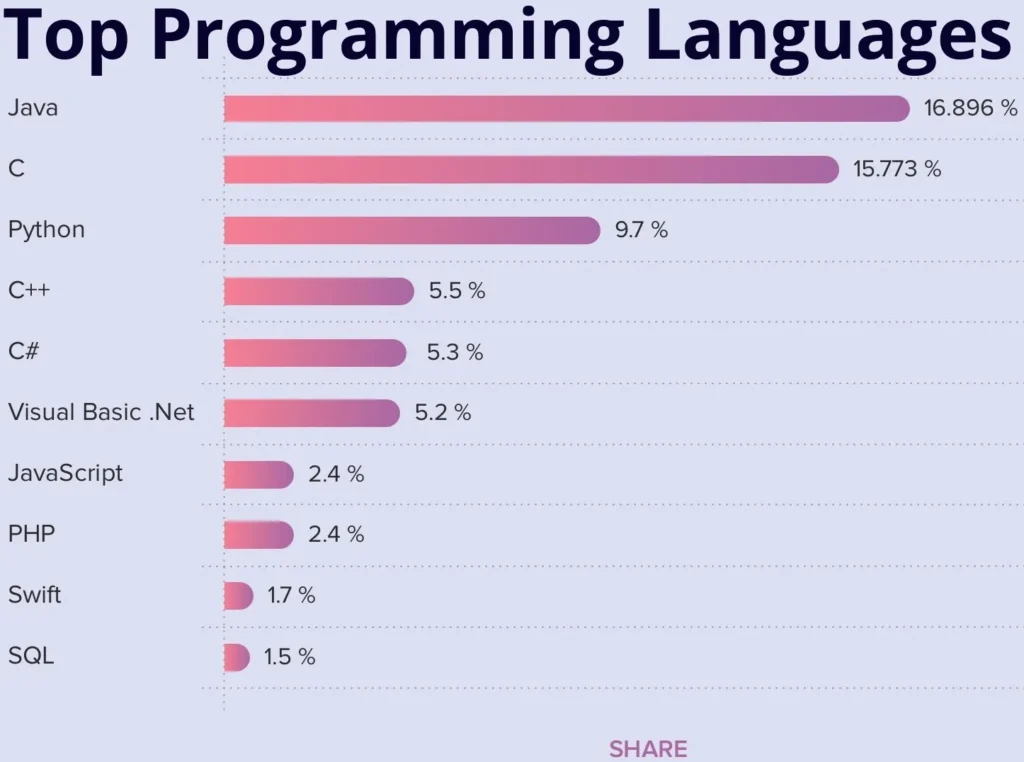
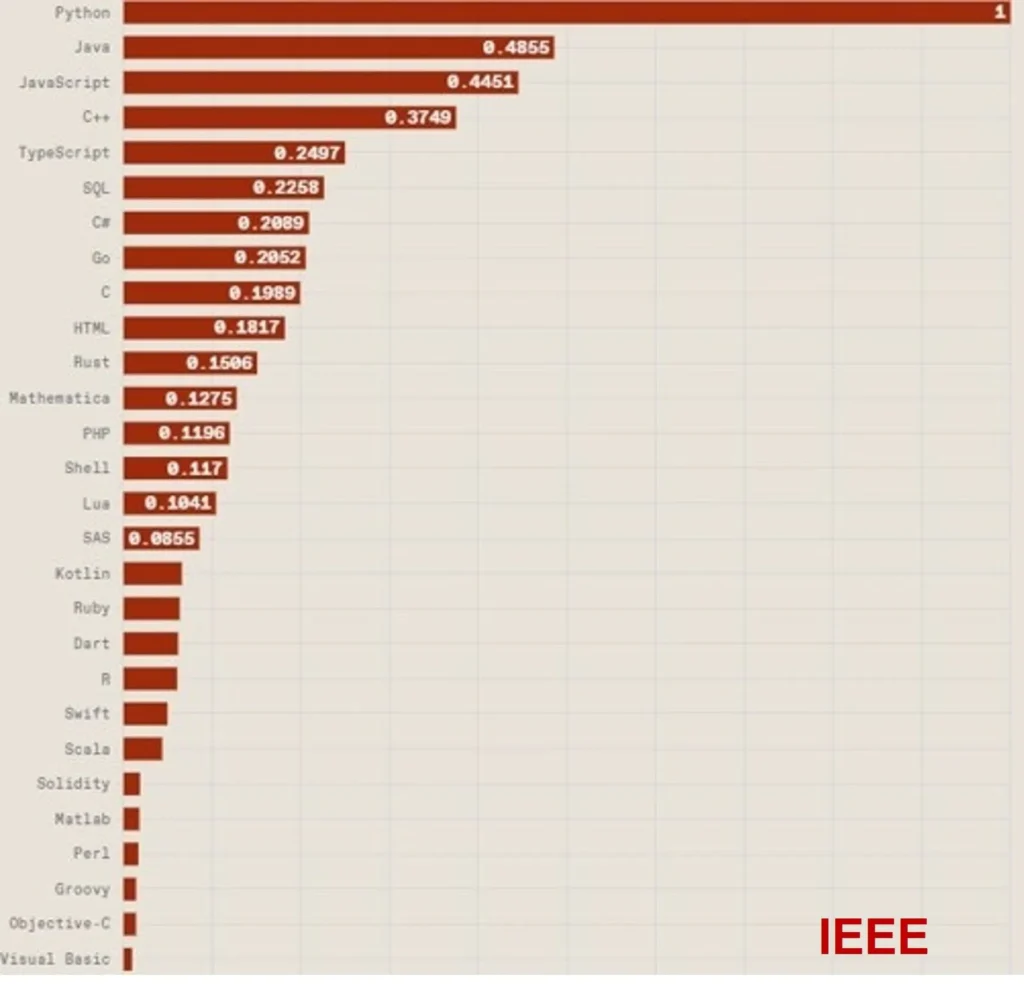
- There are several programming languages in existence today, with courses available from GIIM as described below.
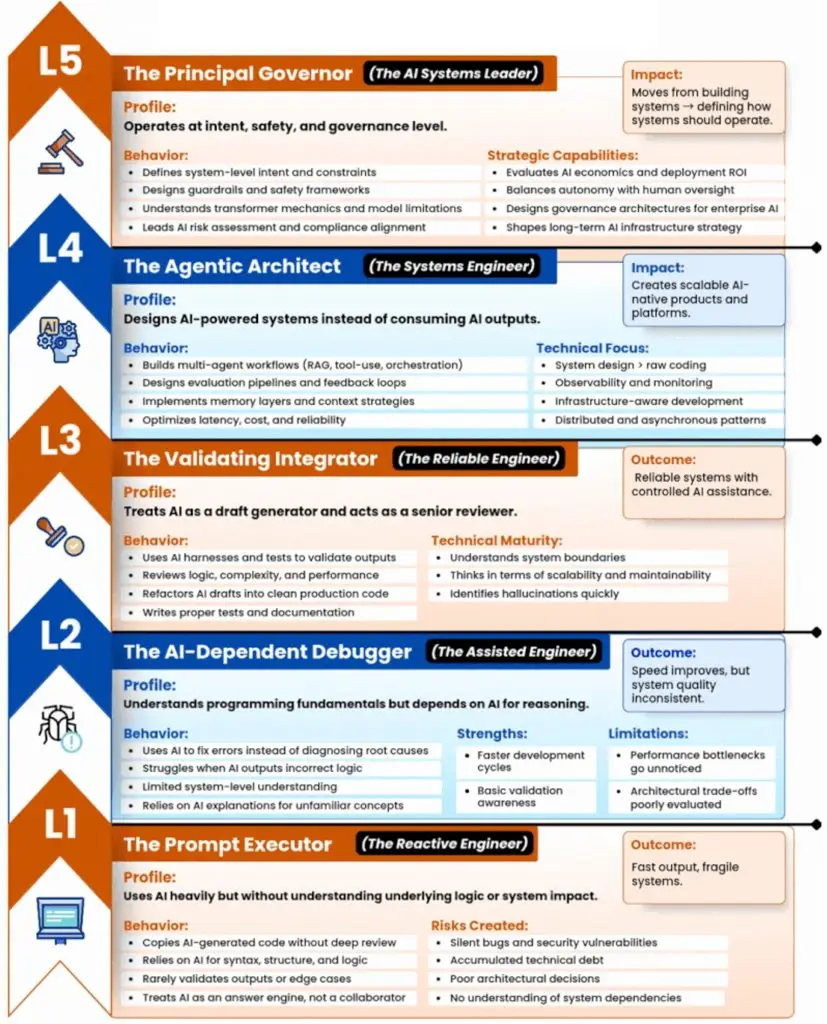
The software engineering landscape is undergoing a profound evolution driven by the rapid maturity of artificial intelligence and automated development tools. While AI handles routine coding tasks, the demand for skilled software engineers who can design complex architectures, solve high-impact system challenges, and lead digital transformation continues to escalate. Historically, every major technological leap—from personal computing to cloud and mobile ecosystems—has ultimately expanded the reach, necessity, and economic value of software engineering.
This program equips candidates with both core programming mastery and modern engineering frameworks to thrive in an AI-augmented landscape. By pairing algorithmic fundamentals with modern data architectures, software engineers are uniquely positioned to turn disruptive technologies into powerful, scalable enterprise solutions. The future of software development isn’t about competing with AI—it’s about leading it!
Target Audience Includes:
- Beginners new to programming/career change
- Data scientists & analysts
- Software Engineers, Developers
- Implementers
- Prior to taking any of these courses, candidates should have taken Fundamentals of Information Technology Management and The Essentials of Data Management courses or their equivalent.
- These technical training courses are designed to provide hands-on, practical experience. Courses facilitate and encourage active engagement in the respective subject matter. This includes a variety of activities such as labs/experiments, design sprints, observations, reflections, interactive workshops, and prototyping.

Examples of Programing Courses:
1. Introduction to Programming & C/C++
An introduction to the use of an advanced programming language for use in engineering applications, using C++ as the basic programming language and Microsoft Visual C++ as the program development environment.
Topics covered include basic syntax (data types and structures, input/output instructions, arithmetic instructions, loop constructs, functions, subroutines, etc.) needed to solve basic engineering problems as well as an introduction to advanced topics (use of files, principles of objects and classes, libraries, etc.). Algorithmic thinking for development of computational programs and control programs from mathematical and other representations of the problems will be developed. Basic concepts of computer architectures impacting the understanding of a high-level programming language will be covered.
2. Introduction to Computer Science and C++
Getting acquainted with C++: data types, input and output, functions, writing simple C++ programs, flow control, Boolean expressions, decision statements, if/then, and switch/case. Loop operations, while, do/while, and for loops. Arrays and pointers. Defining structures and classes, constructors and destructors, and operator overloading using an example String class. Templates. Abstract data types: vectors, lists, stacks, queues, and priority trees with applications. Trees and simple sorting with searching algorithms.
3. Introduction to Programming and Java
Advanced programming concepts covering classical data structures and object-oriented programming. Emphasis will be on building a collection of re-usable software components that will form the basis of future programming efforts. The data structures covered include lists, stacks, queues, trees, binary search trees, and balanced search trees. The object-oriented features of Java covered include classes, templates, inheritance, polymorphism and run-time binding. Also included is a discussion of the analysis of asymptotic running times of algorithms.
4. Java Programming
Master the foundation of modern software development with Java—one of the world’s most versatile and widely used enterprise programming languages. Designed for beginners with little to no coding experience as well as developers looking to strengthen their core skills, this course provides a seamless journey from basic programming fundamentals to intermediate and advanced Java concepts.
Through hands-on projects, real-world case studies, and practical IDE workflows (using Eclipse), participants will learn to design, build, and debug robust, object-oriented applications. You will acquire essential skills in clean code documentation (Javadoc), modern Java features (Streams, Lambdas), data processing (JSON/CSV), database connectivity (JDBC), and enterprise-grade security practices.
Core Learning Objectives
Upon completion of this course, candidates will be able to:
Build & Debug Efficiently: Develop, test, and debug Java applications using an Integrated Development Environment (IDE) like Eclipse and generate professional Javadoc documentation.
Implement OOP Principles: Apply Object-Oriented design patterns, abstraction, interfaces, inheritance, and exception handling to write modular, reusable code.
Utilize Modern Java Features: Leverage Java 8+ functional programming capabilities, including Lambda expressions, Streams, and the Collections framework.
Handle Data & Databases: Read and write CSV/JSON files, manage File I/O, and execute database operations using JDBC APIs.
Write Secure, Concurrent Code: Understand basic concurrency, thread management, and Java security protocols for distributed enterprise computing.
Important Topics Covered & Addressed
1. Foundations of Programming & Java Syntax
Program structure, execution flow, and compilation mechanisms.
Data types, variables, operators, and control flow structures (
if-else,switch, loops).Arrays, memory allocation, and algorithmic logic (including recursion).
2. Object-Oriented Programming (OOP) Implementation
Class design, object creation, methods, constructors, and encapsulation.
Inheritance structures, polymorphism, and dynamic method dispatch.
Abstract classes vs. Interfaces for designing decoupled, extensible systems.
3. String Manipulation & Memory Optimization
Differences and performance trade-offs between
String,StringBuffer, andStringBuilder.String immutability, pattern matching, and efficient text processing.
4. Error Management & Data Structures
Robust error handling using
try-catch-finallyblocks and custom exception classes.Type safety using Generics.
The Java Collections Framework (
List,Set,Queue) and Key-Value mapping via theMapAPI (HashMap,TreeMap).
5. Functional & Modern Java Capabilities (Java 8+)
Functional interfaces and Lambda expressions for concise syntax.
Data manipulation using Java Streams, filtering, mapping, and reduction pipelines.
6. File Operations, Data Parsing, & I/O
Stream-based File I/O for structured and unstructured data.
Parsing, reading, and writing CSV files.
JSON data serialization and deserialization for web/API integration.
7. Enterprise Integration, Concurrency, & Security
Introduction to multi-threading, task synchronization, and thread concurrency.
Relational database connectivity using JDBC (executing queries, managing result sets, connection pooling).
Java security features, encryption basics, and safe execution in distributed environment APIs.
5. Python Programming
Python is a high-level, universally useful programming language with a rich syntax that allows software engineers to concentrate more on critical thinking than on syntax errors. There are many reasons to learn python. Examples include Web Testing, Data Extraction, Multiple Programming Paradigms, Artificial Intelligence (AI) and Data Science, Cybersecurity, Web Application, and Internet
This course covers everything starting from basics to advanced of Python & MongoDB Concepts. Even Students without basic Python & MongoDB understanding can easily grasp concepts as everything is being taught from basics in a detailed manner.
The Python course will cover topics such as Execution, Variables and Numbers, Strings, Conditionals, Functions, OOPS etc., Upon completion of this course candidates will understand how to use Python the right way, complex functions in python, create/deliver programs with python.
Database considerations will address topics such as RDBMS Vs NoSQL, MongoDB Installation in Windows and Linux, Storage, Aggregation, Backup and Recovery, DB Cloud & Ops Manager Fundamentals etc.
Other topics include:
- Introduction
- Installation and Working with Python
- Understanding Python variables
- Python Basic Operators
- Python blocks
- Data Types
- Declaring and using Numeric data types
- Using String data type and operations
- Defining List
- Use of Tuple data type
- Python Program
- Flow Control Conditional blocks using if, else and elif
- Simple for loops in Python
- For loop using ranges, string, list, and dictionaries
- Use of while loops
- Loop manipulation using the pass, continue, break, and else
- Programming using Python conditional and loops block
- Functions, Modules & Packages
- Organizing python codes using functions
- Organizing python projects into modules
- Importing own module & external modules
- Understanding Lamda function in Python
- Programming using functions, modules, and external packages
- String, List & Dictionary
- Building blocks of Python programs
- Understanding String in build methods
- List manipulation using in build methods
- Dictionary manipulation
- Programming using String, List, and Dictionary in build functions
- File Operation
- Reading config files in Python
- Writing log files in Python
- Understanding read functions, read(), readline() and readlines()
- Understanding write functions, write() and writelines()
- Manipulating file pointer using seek Programming using file operations
- Object-Oriented Programming
- Concept of class, object, and instances
- Constructor, class attributes, and destructors
- Inheritance, Overlapping, and Overloading operators
- Adding and retrieving dynamic attributes of classes
- Regular Expression
- Pattern matching and searching
- Pattern searching using regex, real-time parsing of data using regex
- Password, email, URL validation using regular expression
- Exception Handling
- What is exception handling
- Safeguarding file operation using exception handling
- Handling error code
- Programming using Exception handling
- Database
- Interaction SQL Database connection / Using Oracle
- Creating and searching tables
- Reading and storing config information on database
See The Essentials of Data Management/Python
6. Intro to Web Programming and Project Development
This course introduces students to the infrastructure underlying the Web, including protocols and markup languages. It also addresses the question of how one presents large volumes of information to people who need to find out what they are looking for quickly. The scope of the course ranges from mechanics to aesthetics. Social and ethical issues are also discussed, including the concept of information ecologies for social acceptance. Networks and protocols; pervasive computing; Web protocols; markup languages and XML; defining information architecture; understanding information needs and information seeking behaviors; organizing Web sites and intranets; navigation systems; search systems; thesauri; from research to design: strategies for information architecture; enterprise information architecture; ethics on the Web; and information ecologies.
7. Web Programming I
This course will provide students with a first strong approach of internet programming. It will give the basic knowledge on how the Internet works and how to create advanced web sites by the use of script languages, after learning the basics of HTML. The course will teach the students how to create a complex global site through the creation of individual working modules, giving them the skills required in any business such as proper teamwork and coordination between groups.
8. Web Programming II
This course focuses on teaching students the newest technologies available in Web Programming. Topics include advanced client side programming, responsive design, NoSQL databases, JQuery, AJAX, Web Site security, and the latest Frameworks. Students will be given the opportunity to suggest topics they would like to discover at the end of the semester. The course is a very hands-on course where everything taught will be practiced through in-class exercises.
9. Object-Oriented Analysis and Design
Theory of object-oriented design, classes, interfaces, inheritance hierarchy, and correctness; abstract data types, encapsulation, formal specification with preconditions, post conditions and invariants, and proofs of correctness; object-oriented software, objects and classes, genericity, inheritance, polymorphism, and overloading; single and multiple inheritance, programming by contract, sub-classing as subcontract, specification, and verification; programming language examples include C+ +, Java, Smalltalk, and Eiffel.
10. Introduction to Windows Programming
This course covers programming for the Windows system environment using current Microsoft tools and technologies. The course emphasizes inter-process communication and synchronization techniques as well as explaining advanced memory management, file handling and asynchronous I/O, multi-threaded processes, and techniques applicable to high-performance and large-scale software systems.
11. Creative Problem Solving and Team Programming
Gives students practice in solving challenging problems by applying algorithmic problem solving techniques learned in prior courses. Students will develop their problem-solving, algorithm-creation, and programming abilities. Problems will be complex and will require invention of an algorithm, not simply straightforward application of standard techniques. Students will work in teams. To provide a focus point and to help make the course fun, students will program their solutions in a style similar to that employed by programming competitions such as the national ACM programming contest. May be repeated for credit.
12. Systems Programming
Introduction to systems programming in C on UNIX. Students will be introduced to tools for compilation, dynamic linking, debugging, editing, automatic rebuilding, and version control. Some aspects of the UNIX system call interface will be studied, drawn from this list: process creation, signals, terminal I/O, file I/O, inter-process communication, threads, network protocol stacks, programming with sockets, and introduction to RPC. Style issues to be covered include: naming, layout, commenting, portability, design for robustness and debugability, and language pitfalls. UNIX programming and GUI design will be covered, if time allows.
13. Advanced Programming in the UNIX Environment
In this course, students will learn to develop complex system-level software in the C programming language while gaining an intimate understanding of the UNIX family of operating systems and their programming environment.
Topics covered will include the user/kernel interface, fundamental concepts of UNIX, user authentication, basic and advanced I/O, file systems, signals, process relationships, and interprocess communication. Fundamental concepts of software development and maintenance on UNIX systems (development and debugging tools such as “make” and “gdb”) will also be covered.
14. Other Technical Tools/Platforms
Linux, Android, Intuit, SAS, Google Sheets, Excel, Tableau, etc.
GIIM has access to a large experienced base of faculty who are prepared to meet the specific demands of our clients; hence other programming language programs can be delivered. These courses cover everything starting from basics to advanced programming techniques and administration. Even candidates without a basic programming understanding can easily grasp concepts as everything is being taught from basics in a detailed manner. The courses will cover topics such as Introduction to command shell, File System, Servers, System Monitoring, System backup and recovery etc.