Modern Lifecycle & Delivery: Driving speed-to-market using advanced DevOps, Continuous Delivery (CI/CD), Agile, and Product-led frameworks.
Intelligent & Scalable Architecture: Designing cloud-native, microservices-based systems and integrating AI (Agentic AI) -assisted engineering (e.g., LLM-based development, automated testing).
Engineering Leadership & Innovation: Applying design thinking, optimizing team dynamics, and navigating change management across cross-functional product teams.
Enterprise Governance & Security: Implementing robust DevSecOps, managing technical debt, and establishing governance frameworks for secure, compliant, and ethical software.
Tailored for Executive Impact, GIIM collaborates with affiliates to customize this program to match your organization’s current technology stack, agile maturity, and strategic initiatives—equipping your leadership team to drive digital transformation with confidence.
After successful completion of this program, candidates will also receive an ICCP or IOA Certification!!!
In an era of relentless technological transformation, software engineering has evolved from writing code to architecting intelligent, resilient digital ecosystems. Modern software engineers are system designers, strategic problem-solvers, and digital innovators who build the core infrastructure driving global enterprise. As artificial intelligence automates routine syntax and repetitive tasks, the engineer’s role is elevated to higher-level challenges: orchestrating complex system architectures, securing data workflows, mastering cloud-native environments, and ensuring enterprise-grade reliability.
This program equips both emerging tech talent and experienced professionals with the foundational computer science principles and advanced technical capabilities needed to lead in an AI-augmented landscape. Participants master the full software engineering lifecycle—from object-oriented design and cloud-native microservices to AI integration and robust systems security. By combining core engineering discipline with cutting-edge AI methodologies, candidates position themselves for high-impact, lucrative careers. Software is the backbone of modern commerce, and those who learn to design, scale, and govern it will shape the future of global business.
The software engineering landscape is experiencing a fundamental evolution driven by artificial intelligence and automated development tools. Rather than diminishing the role of software developers, AI is elevating it—automating routine code syntax so engineers can focus on high-level system architecture, security, and complex problem-solving. Historically, every major technology shift—from the advent of personal computing to cloud and mobile paradigms—has ultimately expanded the need for skilled software talent.
While hiring trends fluctuate in the short term, long-term industry fundamentals remain exceptionally strong. The U.S. Bureau of Labor Statistics projects a 17% growth rate for software developers through 2033, adding over 327,000 new positions with a median annual salary exceeding $130,000. The future of software engineering belongs to professionals who can bridge foundational computer science with intelligent, AI-augmented design.
This program equips candidates with the core architectural, coding, and analytical capabilities required to thrive in a modern tech ecosystem. Software remains the digital engine of the global economy—and the engineers who learn to orchestrate AI tools today will architect the world-changing technologies of tomorrow!
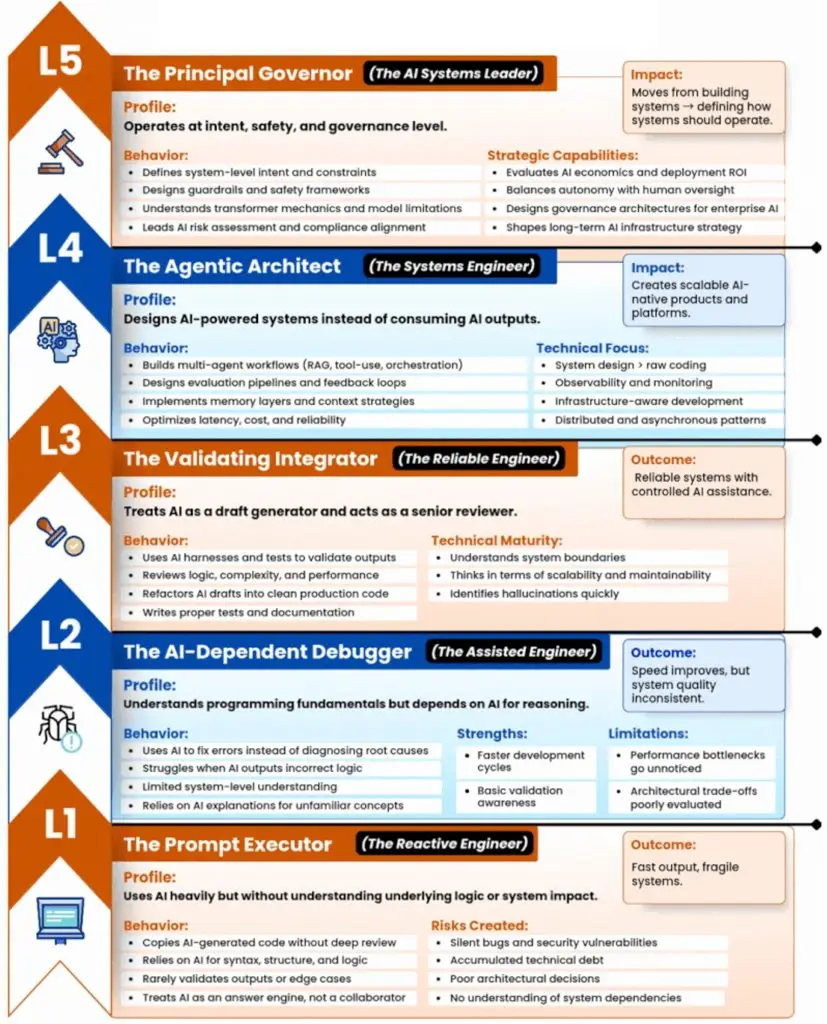
5 AI SW Engineering Levels
Generative AI is no longer a frontier technology. It is a strategic lever reshaping the software industry. What was once a specialized capability is now a core competency, redefining how products are built, how teams operate, and how organizations compete.
The traditional software development cycle (long planning phases, multi-week sprints) has been compressed. AI-accelerated workflows enable faster iteration, smarter systems, and more adaptive execution. This shift isn’t just technical; it’s cultural. It redefines what “impact” means for engineering teams and elevates the bar for innovation.
Today’s engineers are not just coding features; they are designing intelligent systems. The rise of agentic AI and multimodal models means that every product decision is now a systems-level decision. A search bar isn’t just a UI element; it is a predictive engine. A chatbot isn’t just reactive; it is a strategic interface.
This transformation demands new skills and new mindsets:
AI fluency across the organization: From product to engineering to design, teams must understand how AI shapes user experience, data strategy, and ethical risk.
Dual competency development: The most effective engineers are both builders of AI systems and power users of AI tools. This duality is a force multiplier.
Ethical and secure design: As systems grow more autonomous, leaders must ensure they remain aligned, transparent, and secure.
For senior leaders, the mandate is clear:
Invest in depth, not just access: Surface-level AI familiarity won’t drive transformation. Upskilling must go beyond prompt engineering to full-stack understanding.
Redefine velocity and value: AI compresses timelines and expands capabilities. The question is not “Can we build it?” but “Can we build it intelligently, ethically, and fast?”
Champion tangible innovation: Theory is not enough. Leaders must incentivize shipped projects that demonstrate real-world application of AI systems.
Leveraging vibe coding where IT and non-IT professionals can describe what they want in plain language and letting an AI model generate the code is revolutionary. So is understanding the roles and steps that must be done prior to deployment.
The demand requires not just learning AI but launching initiatives with it!
Information technologies touch every segment of society, driving change and innovation across every industry. As organizations integrate new technologies to compete in the global environment, they require more computer software engineers to implement those new technologies. Today’s complex and competitive business environment demands that companies vigilantly ensure the reliability and integrity of computer systems to avoid costly and potentially catastrophic disruption. But, some of the mistakes from the past continue to be made. To ensure success and guard against failure, alert industries engage technically qualified experts with sound managerial judgment.
The World Economic Forum estimates that over 130 million jobs will be created globally in new professions, where demand for data scientists, software engineers and a myriad of roles requiring digital skills are growing rapidly. In addition, successful managers and leaders increasingly require a strong working knowledge of digital technologies, as well as 21st century leadership skills including the ability to be adaptable, innovative and creative.
This certificate offers what candidates need to know to understand fail-safe computer systems, both rapidly and prudently. The Software Engineering Certificate provides a foundation in technical concepts and design techniques, as well as management, organizational, governance, and teamwork approaches, for building software systems. The emphasis of this certificate is on implementing software engineering projects within cost and schedule by applying the most current proven and innovative practices that overcome the shortcomings of an undisciplined approach. The implications of AI on SW engineering will be covered as a fundamental topic throughout all of the courses.
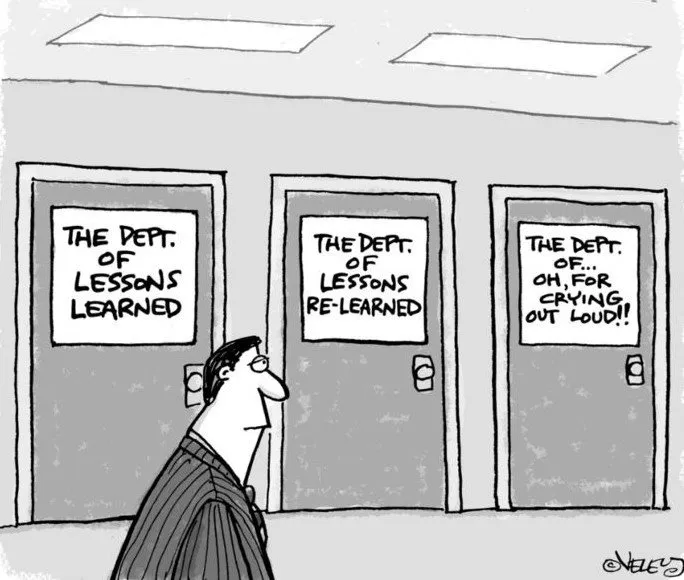
The success rate of today’s digital initiative resembles the traditionally low success rate of IT Projects. We continue to make the same mistakes.
Dr. Luftman's Article on Agile-Alignment & Technology Turbulence
The software industry is underintense pressure to deliver quality software. Because software production remains a labor intensive activity, the demand for large volumes of high quality software translates into a strong demand for qualified software engineers. This certificate is comprised of an appropriate balance of theoretical computer science foundations and IT management considerations that afford candidates with the means to remain abreast of developments in software engineering in the long term and practical applications that afford graduates the means to be operational in the short term.
Building on the lessons learned from the past is fundamental. Managers and software professionals who enroll in this certificate will become authorities on quantitative, rather than qualitative problem-solving methods, while learning to deal with a broad spectrum of enterprises—from small-scale to large complex projects.