More about GIIM's Managing Data as an Asset Program

Core Strategic Focus Areas:
Data Governance & Risk Management: Establishing frameworks for data privacy, cybersecurity, compliance, and ethical AI deployment.
Integrated IT-Business Strategy: Unifying modern intelligence engines (AI/Agentic AI, cognitive computing, blockchain) with legacy infrastructure to maximize business value.
Talent & Organizational Design: Structuring high-performance teams, modernizing reporting structures, and building the organizational data literacy required to drive a data-first culture.
Executive Concentrations Include:
Enterprise AI, Machine Learning, & Cognitive Systems
Big Data Strategy, IoT, & Decentralized Systems (Blockchain)
Intelligent Automation & RPA
Advanced Business Intelligence & Knowledge Management
Tailored for Enterprise Leadership: GIIM collaborates closely with each affiliate to align this program with your organization’s data maturity, regulatory landscape, and executive objectives—ensuring immediate, strategic impact for your leadership team.
After successful completion of this program, candidates will also receive an ICCP or IOA Certification!!!

Managing Data Concentrations Includes:
Data Analytics, Textual Analytics, AI (Agentic AI), Big Data, Blockchain, Business Intelligence, Cognitive Computing, IoT (Internet of Things), Knowledge Management, & Robotics Process Automation.
The world is experiencing profound business, technical, and social/political/economic/environmental changes; perhaps more momentous than at any other time. Many of the most significant changes are associated with business analytics and big data, especially when combined with other emerging information technologies like cloud, AI, robotic process automation, Blockchain, social networking, mobile, cognitive computing, and the Internet of Things.
Some call data the new oil. Others call it the new gold. Philosophers and economists may argue about the quality of the metaphor, but there’s no doubt that organizing and analyzing data is a vital endeavor for any enterprise looking to deliver on the promise of data-driven decision-making.
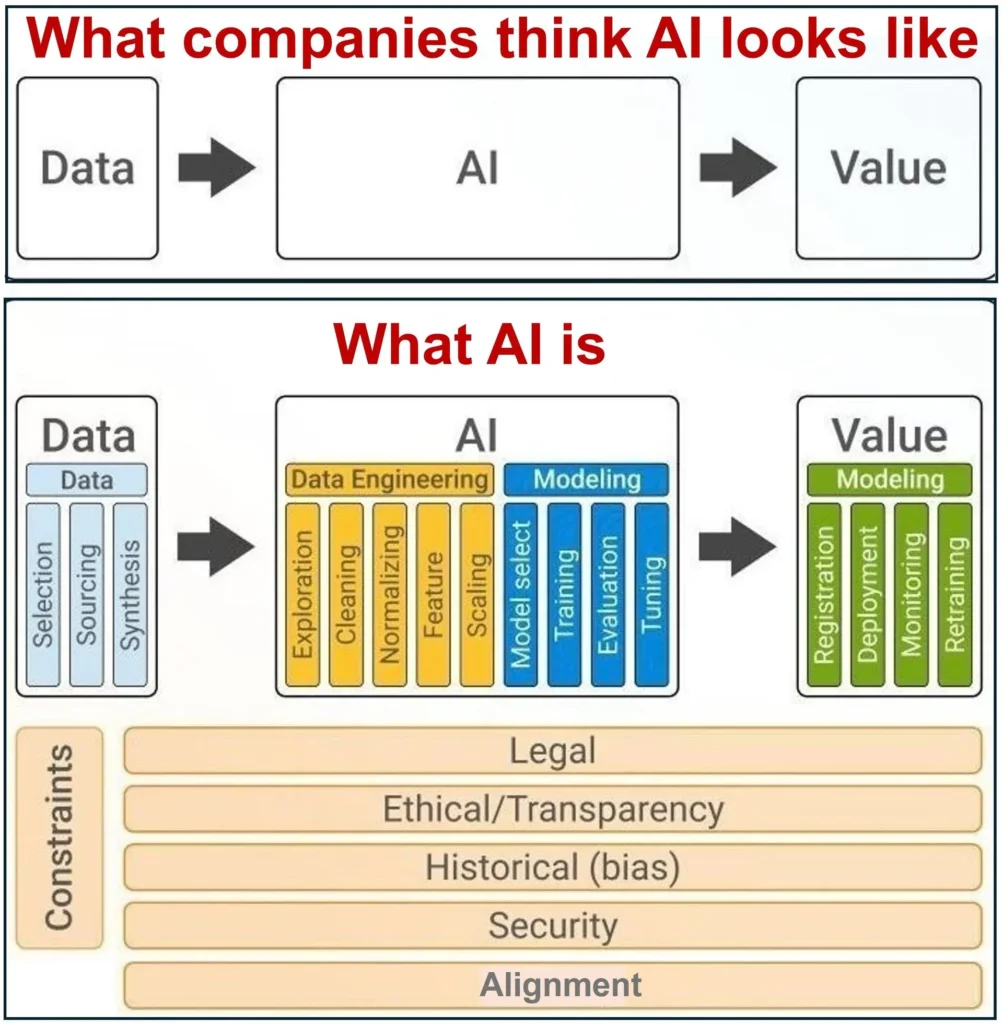
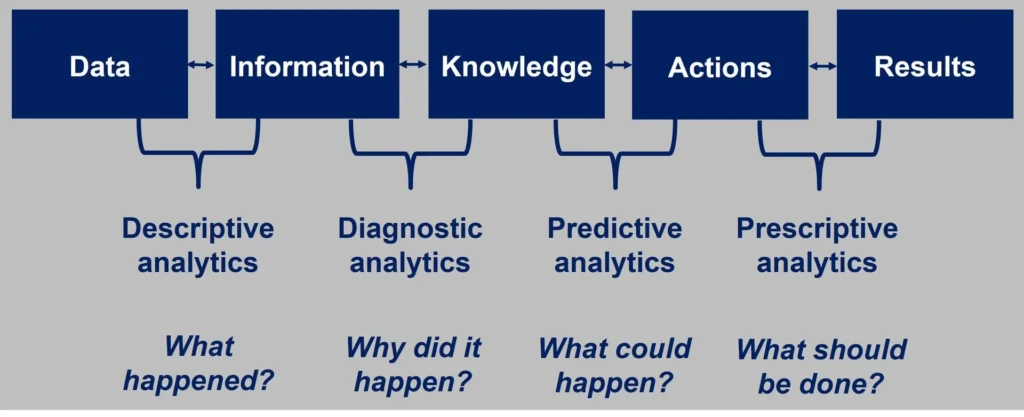
However, focusing just on data or on technical considerations will not lead to demonstrable business value. Companies with enterprise-wide AI and data strategies and leadership that communicates a bold vision are nearly 1.7 times more likely to achieve higher outcomes (ref. Deloitte). Understanding the data value chain is essential:
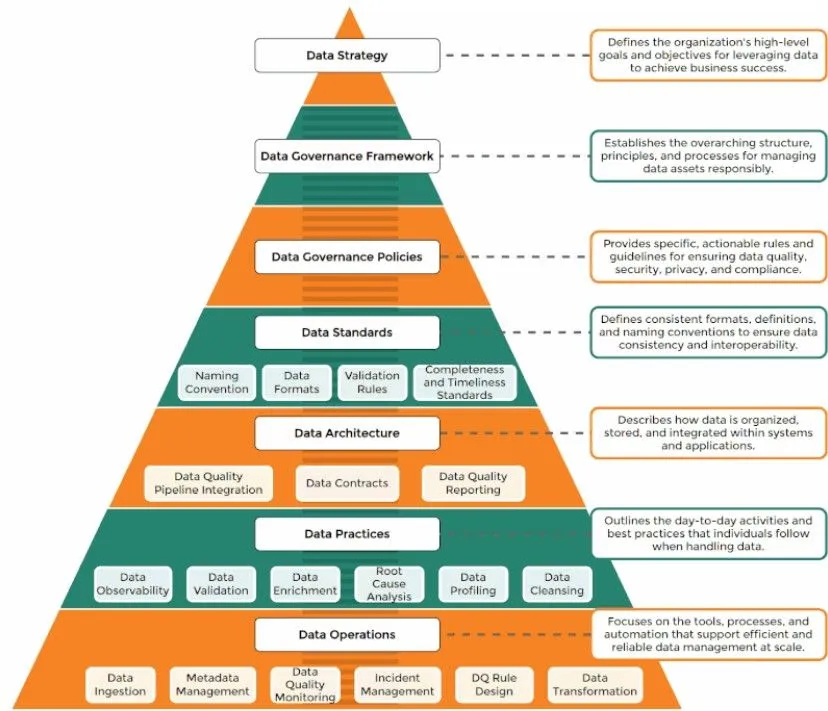
DATA QUALITY PYRAMID
- Guidance and expectations for data quality originate from the top of the pyramid.
- Activities related to data quality are primarily located at the base of a data governance pyramid.
- Data Governance Policies should establish guidelines for maintaining data quality.
- The actual implementation of data quality begins at the Data Standards level by defining requirements based on conventions.
- Data practices outline your approach to managing day-to-day activities that ensure data quality.
- The bottom operational layer involves tasks to address data quality issues, rectify errors, and develop new rules to ensure data quality.
The integration of these technologies is the impetus for enterprise changes enabled and driven by IT beyond the traditional cost savings brought by business process and productivity improvements; it is the growing trend around the globe of leveraging IT for revenue-generating initiatives that has made this so noteworthy. It is the overall return on information that is generating revenue! These initiatives are driving the most significant transformational changes for the next decade and beyond.
Information will be to the 21st century what steam, electricity, and fossil fuel were to prior centuries. How we harness this potential and take advantage of these emerging and disruptive technologies may become the central question for management over the next several years.
We are creating 2.5 quintillion bytes of data every day (that’s 2.5 followed by 18 zeros). To harness that potential, companies need A.I. to make sense of the data, and hybrid cloud computing platforms that can distribute it across organizations.
A report from MIT says digitally mature firms are 26% more profitable than their peers. McKinsey Global Institute indicates that data-driven organizations are 23 times more likely to acquire customers, six times as likely to retain customers, and become 19 times more profitable. Overall, Data and Analytics today are the next frontier for innovation and productivity in business. But achieving a sustainable competitive advantage from Data and Analytics is a complex endeavor and demands a lot of commitment from the organization. Gartner says only 20% of the Data and Analytics solutions deliver business outcomes. A report in VentureBeat says 87% of Data and Analytics projects never make it to production.
Our annual IT management trends research over the last 20+ years has placed big data/business analytics as the number one emerging technology investment around the globe. This, in concert with the trends research also indicating a global increase in the use of IT for revenue-generating initiatives, is demanding that organizations address how to leverage this important set of technologies.
The focus of these courses is to address how organizations can get value from Data and Analytics. Specifically, how can enterprises leverage data, AI (Artificial Intelligence), and BI (Business Intelligence) for competitive advantage? Having IT and non-IT executives working in harmony to reconcile questions like the following has become essential:
- What is our data and analytics strategy?
- Are our strategic, tactical, and operational governance processes effective for data and analytics across the business and IT?
- Are the above integrated across other new and “older” technologies?
- Are we organized to harness the value of our data?
- How and what data should we capture?
- Where should we store the growing availability of data?
- What analysis is possible and worthwhile?
- Do we have the right IT, business, and industry skills?
- Who should be responsible?
- What are the long-term business implications for cognitive computing, AI, blockchain, and robotic process automation?
- What ethical and regulatory questions and considerations might arise, and how to deal with them?
- How could/should our business model change based on the above?
- What are the different strategies and considerations when introducing these new technologies versus when scaling up the use of these technologies
Business Intelligence versus Data Science
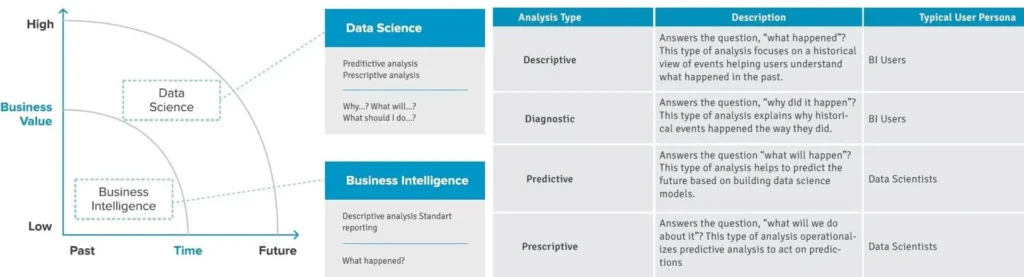
In the modern digital economy, data is no longer merely an operational byproduct—it is a core strategic asset and the primary fuel for artificial intelligence, machine learning, and automated decision-making. However, technology alone cannot guarantee success: bad data leads to bad decisions, biased AI, and compromised organizational trust. Whether in financial forecasting, supply chain optimization, or customer engagement, algorithms trained on flawed data generate exponential risk. Preventing costly missteps requires far more than technical expertise—it demands visionary leadership, robust data quality, and cross-functional governance.
Navigating this complex landscape requires bridging the gap between technical execution and enterprise strategy. This program equips both IT and business leaders with the management frameworks needed to transition from fragmented “big data” to actionable, trusted “smart data.” Participants will explore how to integrate emerging technology architectures—including Generative AI, Robotic Process Automation (RPA), IoT, Blockchain, and Multi-Cloud environments—with the business management and governance skills necessary to drive measurable value.
A central focus of the program is organizational design and data leadership. From evaluating the strategic role of the Chief Data Officer (CDO) or Chief Analytics Officer (CAO) within the C-suite to establishing enterprise-wide data governance, participants will gain the insights needed to align data strategy with culture, compliance, and corporate vision.
Data Positions and Careers
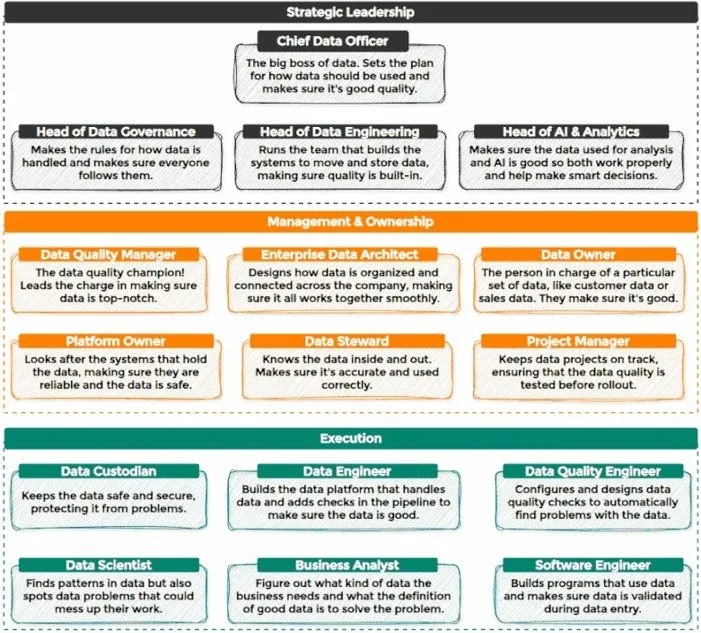
The key is for executives to consider data as an asset – to determine how best to manage it, to exploit its potential, as we would with any other asset. How should it be acquired, stored, maintained, and put to work? Recognizing the importance of IT and non-IT organizations working collaboratively is essential.
Identifying the options that managers (in particular CEOs and CIOs) have available to address these important questions is fundamental. Business Schools around the world are manufacturing Masters Degrees in analytics as fast as possible. Senior managers will attend seminars and read reports such as those mentioned above to keep up with these important trends. Students undertaking MBAs will no doubt find a minor in this area. However, for the vast majority of IT and non-IT managers, something else is needed. In essence, flexible programs addressing the technical, business, management, industry, and organizational considerations are key.
To this end, the Global Institute for IT Management (GIIM) has developed two 4-course certificate programs to address these important considerations. One ( Deploying Analytics ) is similar to many university IT analytics programs that are being offered, albeit with a stronger focus on industry and practical considerations. This (the second) Managing Data as an Asset Certificate focuses on the leadership, management, and industry skills necessary to leverage this important new technology; how to derive value from data.
No doubt the Global Institute for IT Management will be just one of many bodies offering education in data and business analytics. However, GIIM brings to the table a selection of exemplary IS academics (from multiple leading universities, where Masters Degrees are also available) and practitioners from around the world with a wealth of experience in executive education, information technology, design and business analytics, as well as a strong industry focus geared for IT and non-IT executives. In addition, GIIM provides a certificate addressing the technical data/analytics responsibilities and a second (the one described here) addressing the management data/analytics responsibilities.
Recognizing that some candidates will have a technical background while others have a more business background, candidates should also consider courses from the Deploying Business Analytics Certificate, IT in Industry Certificates, IT Security Management Certificate, and IT in Marketing Certificate. Candidates should have completed the course Data Management & Warehouse Considerations (The second course in the Deploying Big Data/Business Intelligence/Knowledge Management Certificate) and the Essentials of Data Management course, or have the equivalent experience before taking this certificate.
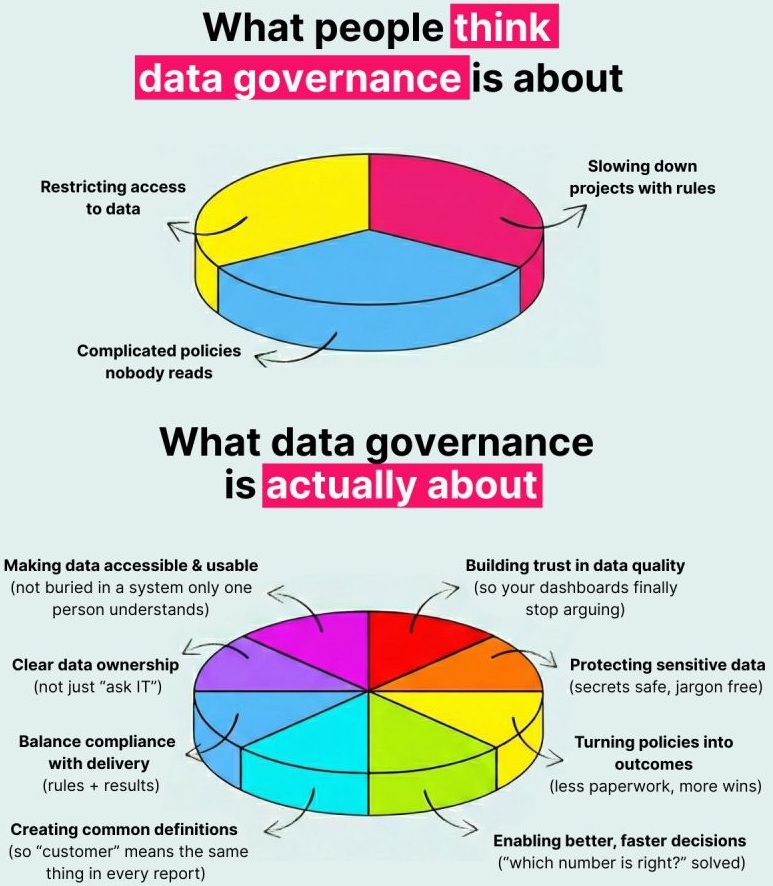
Data governance has become fundamental:
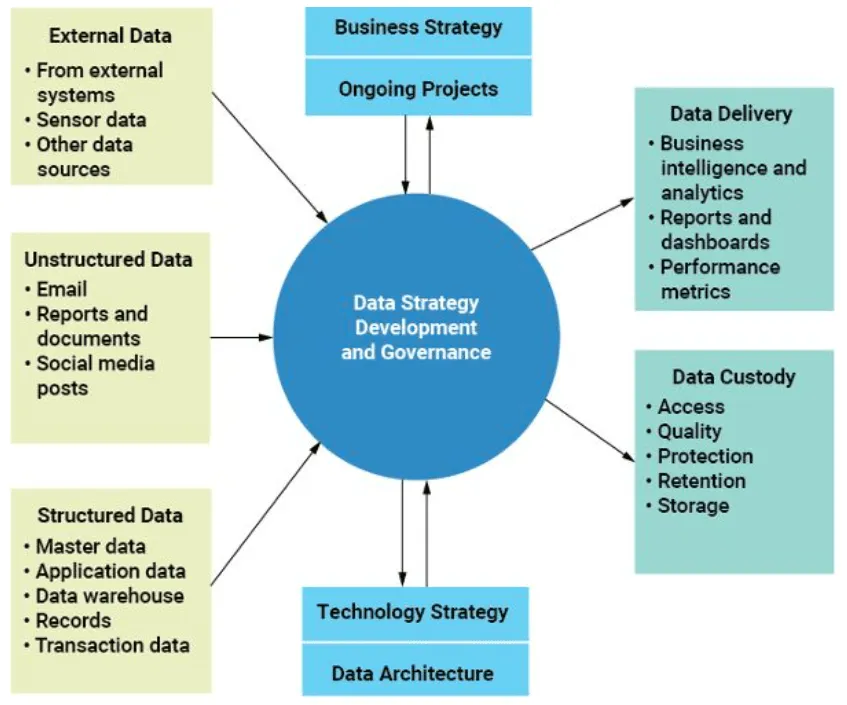
The courses in this certificate focus on strategic data management matters such as governance, organizational/reporting, sourcing (including skills and human resources), security, legal, and building an integrated IT-business data strategy (including data, analytics, cognitive computing, robotic process automation, blockchain, legacy systems, etc.). The courses also address the different considerations for effectively starting/introducing a technology versus scaling up the use of the technology. It is intended for experienced IT and non-IT executives.