More About GIIM's Digital Business Process Management Program
Core Focus Areas:
Process Design & Intelligence: Advanced identification, documentation, and predictive modeling.
Intelligent Automation: Integrating AI, Robotic Process Automation (RPA), and next-gen technology.
Performance & Control: Real-time process monitoring, optimization, and continuous improvement.
Strategic Alignment: Managing change, mitigating compliance and risk, and maintaining a strict focus on customer experience.
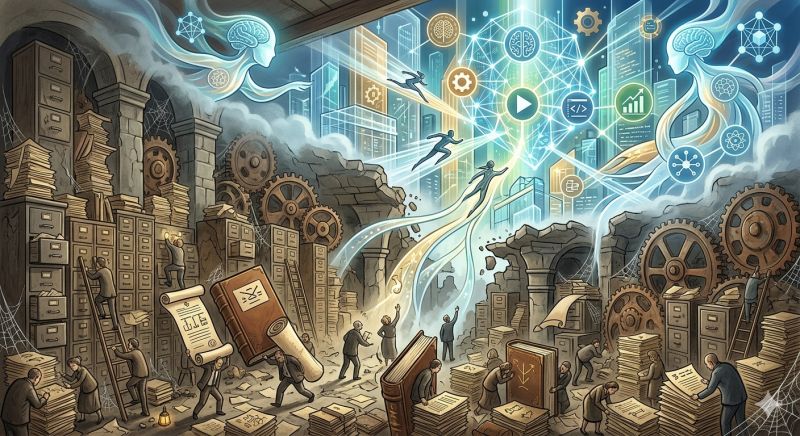
Business Process Management (BPM) provides the framework and technologies needed to build agile, intelligent workflows across end-to-end organizational operations. Driven by advances in hyperautomation, AI-driven analytics, and API-led integration, modern BPM automates complex task coordination and resource allocation. It shifts organizations from static process management to dynamic, continuous improvement—ensuring operational resilience, regulatory compliance, and alignment with industry standards such as the BPM Lifecycle Framework, ITIL, and SCOR.


BPM is not what it was even a few years ago. Understanding emerging information technologies and their impact on enhancing business processes, as well as the roles and responsibilities of IT and non-IT stakeholders in leveraging these emerging technologies in light of digital transformation, will be at the heart of all courses.
Knowledge Area Focused On
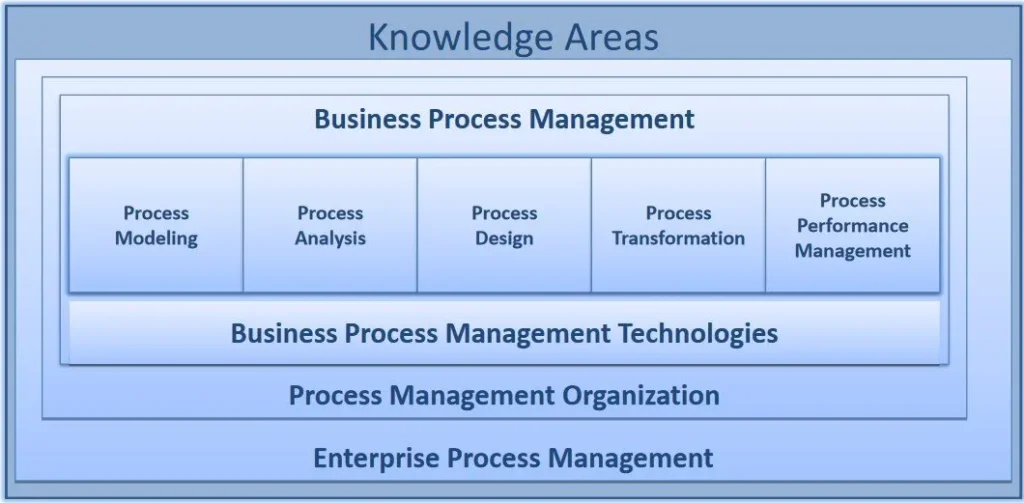
Modern Business Process Management extends far beyond static process modeling—it is the engine that drives enterprise agility, operational efficiency, and digital execution. Designed for technology professionals and business leaders alike, this program equips candidates to manage complex process transformation initiatives while preparing them for senior-level BPM responsibilities and professional certification (such as the ABPMP Certified Business Process Professional).
Because technology alone cannot yield performance improvements without operational realignment, IT leaders must serve as catalysts for process change. This program emphasizes how to partner with business stakeholders to re-engineer core workflows, modernize legacy operations, and maximize returns on enterprise platforms (ERP, CRM) as well as emerging technologies—including Generative AI, intelligent automation, cloud ecosystems, and real-time data analytics.
Through applied frameworks, candidates learn to align technical architecture with business strategy, build resilient workflows, and lead cross-functional transformation initiatives across the enterprise.