More about GIIM's Digital Retail Program

Retail is not what it was even a few years ago. Understanding emerging information technologies and their impact on the retail industry, including the roles and responsibilities of IT and non-IT stakeholders in leveraging these technologies amid digital transformation, will be an important topic in all courses.
As artificial intelligence reshapes how retail organizations operate and compete, the central question is no longer whether AI will augment human capability, but how leaders will integrate the strengths of both to unlock new levels of innovation, productivity, and enterprise value. The future is not a choice between humans and AI; it is a leadership challenge to orchestrate the best of both.
GIIM’s programs are designed precisely for this moment. They equip retail leaders to harness the combined potential of human intelligence and artificial intelligence, ensuring each amplifies the other to drive measurable business impact.
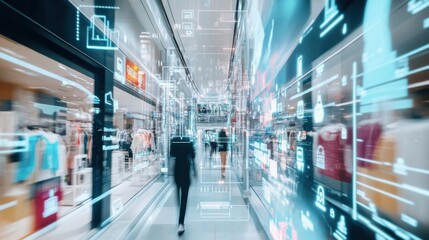
Examples of AI’s impact on the Retail Industry: Improving Efficiencies, accuracy & accessibility
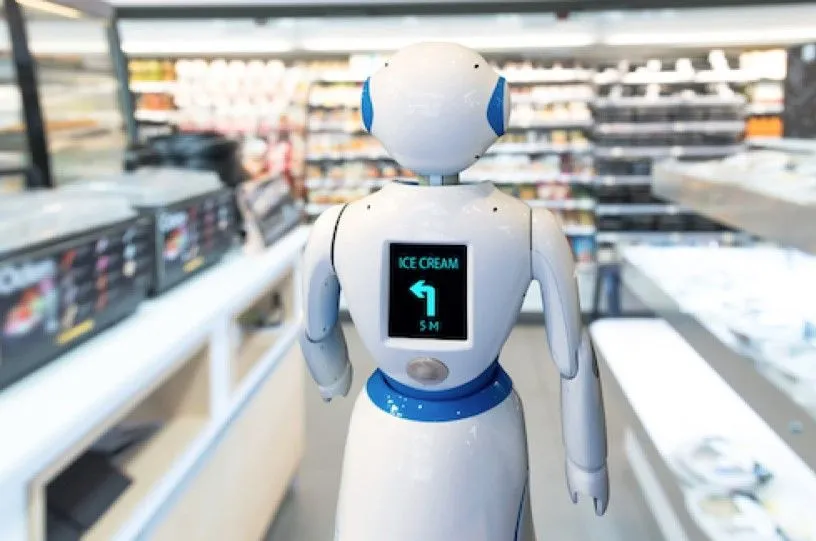
1. E-Commerce & Online Retail
Hyper-Personalization & Product Recommendations: AI algorithms analyze real-time browsing behavior, clickstream data, and purchase history to dynamically tailor product recommendations, landing pages, and special offers for individual shoppers.
Conversational Commerce & AI Chatbots: Natural language processing (NLP) powers 24/7 shopping assistants that handle complex customer inquiries, guide product discovery, and assist with sizing and compatibility.
Visual Search & Generative AI Styling: Shoppers can upload photos or screenshots to instantly find visually similar items across inventory catalogs, while virtual try-on tools reduce return rates.
Dynamic Pricing & Markdown Optimization: Machine learning models continuously adjust online pricing based on competitor movements, real-time demand signals, inventory levels, and customer elasticity.
2. Brick-and-Mortar Stores & Grocery
Automated Checkout & Computer Vision: Autonomous checkout technologies and smart cart sensors enable frictionless, walk-out shopping experiences that eliminate checkout lines.
Smart Shelf & Inventory Monitoring: IoT sensors and computer vision track shelf stock levels in real time, alerting staff to out-of-stocks, misplaced items, or impending expiration dates (particularly crucial in grocery).
In-Store Foot Traffic & Heat Mapping: Computer vision analyzes customer movement and dwell times within physical aisles to optimize store layouts, product placement, and visual merchandising.
Personalized Mobile App Engagement: Geofencing and AI push notifications deliver targeted promotions, aisle guidance, and loyalty rewards directly to a shopper’s smartphone while they walk through the store.
3. Supply Chain, Warehousing & Fulfillment
Predictive Demand Forecasting: Advanced machine learning integrates macroeconomic trends, local weather patterns, seasonal events, and historical sales data to forecast SKU demand with high precision.
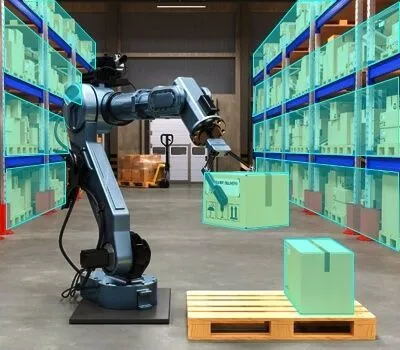
Autonomous Warehousing & Robotics: AI-guided automated guided vehicles (AGVs) and robotic picking arms streamline warehouse fulfillment, drastically cutting down order-processing times.
Dynamic Route Optimization & Last-Mile Delivery: AI logistics platforms optimize delivery routes in real time based on traffic, weather, and delivery windows, reducing fuel costs and speeding up customer fulfillment.
Automated Returns Management: Intelligent triage systems assess returned merchandise data to instantly determine the most profitable restocking, refurbishing, or liquidation pathway.
The Retail & Omnichannel Commerce Ecosystem
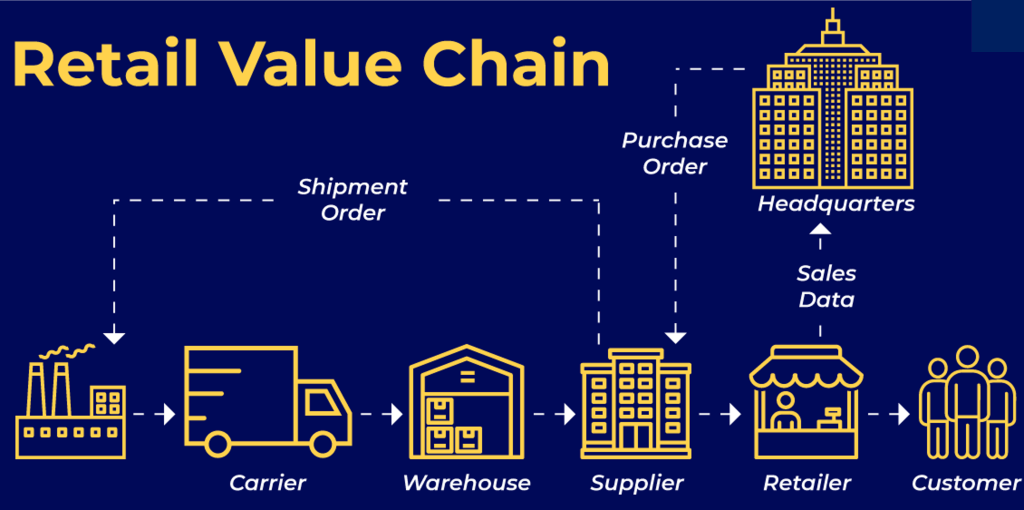
Unlike traditional linear supply chains or standalone storefronts, the modern retail value chain is a dynamic, interconnected ecosystem. It seamlessly bridges global sourcing, manufacturing, omnichannel distribution, physical store networks, e-commerce platforms, and direct-to-consumer (D2C) touchpoints. To deliver exceptional end-to-end customer value, modern digital leaders must understand how every touchpoint—from digital discovery and personalized marketing to automated inventory, frictionless checkout, and last-mile fulfillment—interconnects to drive loyalty and competitive advantage.
The Digital Retail Certificate focuses on the use of IT to enhance the strategic, tactical, and operational elements across the retail industry value chain.
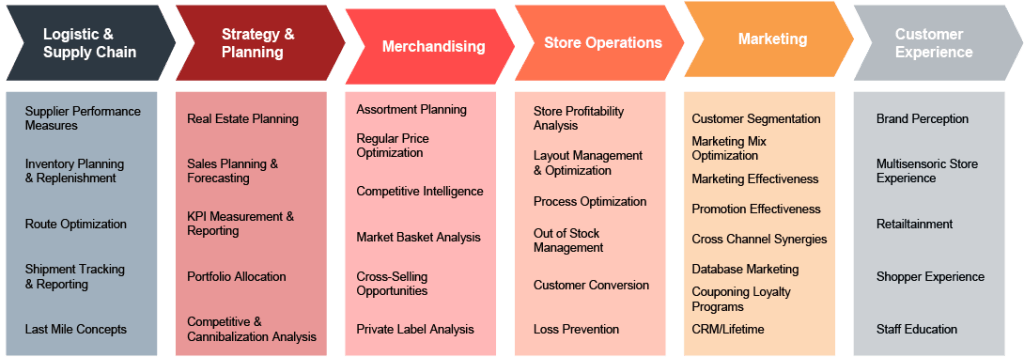
Strategic Implications for Digital Leaders
Mastering the retail value chain requires breaking down traditional silos between digital e-commerce channels, physical stores, and supply chain operations. As shoppers increasingly demand hyper-personalized experiences, flexible fulfillment (BOPIS, same-day delivery), and seamless omnichannel continuity, executives must leverage advanced analytics, unified inventory systems (OMS), and emerging technologies. Aligning digital strategy across this entire retail ecosystem is critical to optimizing margins, reducing inventory friction, and securing long-term customer lifetime value.

Management Competencies
To effectively lead this transformation, modern executives must master a core set of strategic competencies:
Unify Omnichannel Channels: Seamlessly integrate physical stores, e-commerce platforms, and mobile apps to deliver a frictionless, unified brand experience.
Optimize Supply Chain & Inventory Transparency: Leverage real-time inventory tracking, predictive demand forecasting, and automated warehouse systems to eliminate stockouts and reduce fulfillment friction.
Elevate Personalization & Customer Engagement: Deploy AI-driven analytics, customer data platforms (CDPs), and targeted digital marketing to deepen customer lifetime value.
Modernize Store & POS Operations: Implement smart checkout solutions, mobile point-of-sale systems, and Internet of Things (IoT) sensors to optimize in-store efficiency.
Bridge IT and Business Strategy: Prepare both IT and merchandising/operations executive professionals to align emerging technologies (AI, cloud platforms, omnichannel OMS) directly with profit margins and retail growth.
The answer to the first question is yes. Digital transformation is not only possible, but also a must.
The answer to the second question is a little more complicated. Retailers have no choice but to go digital, and other industries should take note.
Most businesses will struggle to meet consumers’ expectations for convenience, immediacy, and personalization without a powerful online presence. The demise of many retailers should serve as a warning to company executives across all industries. Consumers expect access to digital tools in banking, healthcare, education — you name it. Companies that fail to provide these things will quickly lose out to the competition.
What Managers Need To Know
The retail industry has changed dramatically in just a few years. Accelerating omnichannel fulfillment, maximizing supply chain visibility, and shifting toward hyper-personalized digital engagement are no longer optional—they are core competitive imperatives driven by retail digital transformation. To succeed, executives must understand how modern digital ecosystems bridge the gap between physical storefronts and real-time e-commerce platforms, ensuring both operational efficiency and long-term customer loyalty.
The courses in this certificate will develop important IT management-related skills, including retail industry-specific analytical, strategic, communication, organization, time management, human resource management, and service management. Candidates will also develop specific retail industry technical leadership and management strategies and skills related to finance, accounting, marketing, services, as they gain knowledge of industry/product specific subject matters (e.g., department stores, clothing stores, grocery stores, convenience stores, specialty stores, auto, home furnishing, multi-channel).
deal for / Who should enroll
Ideal for: Retail Executives, Omnichannel Directors, E-Commerce & Digital Leaders, Supply Chain & Logistics Managers, Store Operations Directors, and Retail CIOs/CDOs.