More about GIIM's Digital Hospitality Program

Hospitality is not what it was even a few years ago. Understanding emerging information technologies and their impact on the hospitality industry, and the roles and responsibilities of IT and non-IT stakeholders in leveraging these emerging technologies in light of the digital transformation, will be at the heart of all of the courses.
The Digital Hospitality Certificate focuses on the use of IT to enhance the strategic, tactical, and operational elements across the hospitality industry value chain.
The Hospitality & Tourism Ecosystem
Unlike traditional linear supply chains or standalone lodging operations, the hospitality and tourism value chain is a multi-sector ecosystem. It seamlessly bridges inbound travel services, destination infrastructure, and guest experiences across hotels, resorts, restaurants, cruise lines, clubs, and attractions. To deliver exceptional end-to-end value, modern digital leaders must understand how every touchpoint—from digital booking engines and global distribution to on-property operations and post-stay engagement—interconnects to drive loyalty and competitive advantage.

Mastering the hospitality and tourism value chain requires breaking down traditional silos between lodging, food & beverage, leisure, and travel operations. As guests increasingly expect hyper-personalized, frictionless digital experiences from planning through departure, executives must leverage advanced analytics, integrated property management systems (PMS/POS), and emerging technologies to optimize every link in the chain. Aligning digital strategy across this entire ecosystem is critical to maximizing lifetime guest value and operational efficiency.
Accurate, accessible, secure data is fundamental to a successful AI initiative and is a key topic addressed in this program. This certificate prepares candidates (IT and non-IT) for challenging careers in the hospitality and tourism industry as it progresses through digital transformation. The certificate provides a comprehensive curriculum that focuses on the impact that emerging information technologies are having on the hospitality industry, combined with the essential IT management skills necessary to leverage IT in the back office and front office, while providing valuable new customer services.
As artificial intelligence reshapes how hospitality organizations operate and compete, the central question is no longer whether AI will replace human capability, but how leaders will integrate the strengths of both to unlock new levels of innovation, productivity, and enterprise value. The future is not a choice between humans or AI; it is a leadership challenge of orchestrating the best of both.
GIIM’s programs are designed precisely for this moment. They equip hospitality leaders to harness the combined potential of human intelligence and artificial intelligence, ensuring each amplifies the other to drive measurable business impact.
Examples of AI's impact on the Hospitality Industry
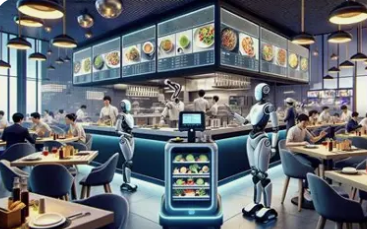


1. Hotels & Resorts
Automated Guest Services & Check-In: AI-powered kiosks and mobile apps streamline arrivals and departures, eliminating front-desk bottlenecks and enabling digital room keys.
Smart In-Room Technology: Voice-activated assistants and IoT-enabled smart rooms allow guests to instantly adjust lighting, temperature, curtains, and entertainment systems.
Predictive Maintenance: IoT sensors combined with machine learning monitor equipment health (such as HVAC systems, elevators, and kitchen appliances) to predict and prevent failures before they impact the guest experience.
Dynamic Pricing & Revenue Management: Advanced algorithms analyze real-time market demand, local events, competitor pricing, and historical occupancy patterns to optimize room rates dynamically.
2. Restaurants, Food & Beverage
Demand Forecasting & Inventory Control: Machine learning predicts daily and seasonal customer foot traffic, minimizing food waste and optimizing supply chain ordering.
AI-Driven Menu Engineering: Data analytics assess menu item popularity and profitability, helping operators refine offerings and price points.
Automated Ordering & Conversational AI: Smart drive-thrus, conversational voice bots, and table-side ordering tablets speed up order entry and reduce labor strain.
Kitchen Automation & Robotics: AI-guided prep stations, automated cooking assistants, and delivery integration streamline backend culinary operations.
3. Cruises & Destination Attractions
Smart Itinerary & Onboard Personalization: AI algorithms curate personalized daily schedules, excursion recommendations, and dining times based on guest preferences and past onboard behavior.
Crowd Management & Queue Optimization: Computer vision and sensor tracking monitor crowd density across theme parks, cruise decks, and resort facilities to dynamically manage foot traffic and reduce wait times.
Dynamic Onboard Upselling: Targeted push notifications offer relevant spa treatments, specialty dining, or premium excursions right when guests are most likely to book.
4. Travel Agencies & Tour Operators
Conversational Booking Assistants: 24/7 multilingual AI travel agents handle complex multi-destination bookings, flight changes, and itinerary adjustments instantaneously.
Hyper-Personalized Recommendations: Generative AI analyzes user profiles, social activity, and past travel history to build bespoke vacation packages and tailored activity suggestions.
Automated Customer Support & Claims: Natural language processing (NLP) powers instant resolution for common traveler inquiries, baggage tracking, and cancellation requests.
Tourism remains a growing industry with a wide array of unique new IT services that are leveraging emerging information technologies. The courses in this certificate will develop important IT management-related skills, including hospitality industry-specific analytical, strategic, communication, organization, time management, human resource management, and service management. Candidates will also develop specific hospitality industry technical leadership and management strategies and skills related to finance, accounting, marketing, and services, as they gain knowledge of industry-specific subject matter such as restaurant management, club management, hotel management, and tourism management.

To successfully navigate and lead digital transformation across the hospitality and tourism ecosystem, modern executives must master a core set of strategic and technical competencies:
Ideal for: Hotel General Managers, Revenue Managers, IT Directors in Hospitality, Restaurant & Club Operators, Tourism Board Professionals, and Digital Strategy Executives.
Strategic Alignment: Linking emerging technologies (AI, IoT, cloud platforms) directly to business goals, guest satisfaction, and long-term revenue growth.
Data-Driven Decision Making: Leveraging predictive analytics and machine learning to optimize dynamic pricing, inventory control, and personalized guest experiences.
Ecosystem & Value Chain Integration: Breaking down operational silos between lodging, food & beverage, travel, and leisure services to create a unified digital guest journey.
Customer Experience (CX) Innovation: Deploying conversational AI, automated check-in, and smart in-room technology to elevate touchpoints across hotels, resorts, cruises, and attractions.
Agile Leadership & Change Management: Guiding cross-functional teams and traditional hospitality staff through digital modernization and continuous operational innovation.