More about GIIM's Digital Energy Program

Energy is not what it was even a few years ago. Understanding emerging information technologies (especially AI) and their impact on all types of energy and their respective industry, and the roles and responsibilities of IT and non-IT stakeholders in leveraging these emerging technologies in light of the digital transformation, will be at the heart of all of the courses.
As artificial intelligence reshapes how energy organizations operate and compete, the central question is no longer whether AI will replace human capability, but how leaders will integrate the strengths of both to unlock new levels of innovation, productivity, and enterprise value. The future is not a choice between humans or AI; it is a leadership challenge of orchestrating the best of both.
GIIM’s programs are designed precisely for this moment. They equip energy leaders to harness the combined potential of human intelligence and artificial intelligence, ensuring each amplifies the other to drive measurable business impact.
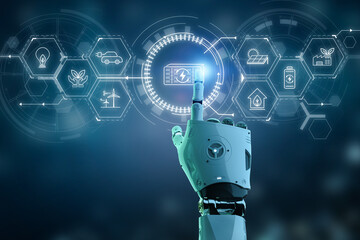
Examples of AI Use in Energy

Petroleum & Hydrocarbons (Upstream, Midstream & Downstream)
Subsurface Exploration & Reservoir Optimization: Leverages machine learning to model complex geological data, analyze seismic patterns, and enhance reservoir fluid dynamics for higher yield and lower exploration risk.
Intelligent Plant & Refinery Operations: Deploys digital twins and real-time sensor analytics to automate refining processes, improve operational throughput, and optimize automated supply chain logistics.
Asset Integrity & Emissions Reduction: Continuous monitoring identifies equipment degradation to prevent costly outages while actively detecting and mitigating methane leaks and operational hazards to meet safety and environmental standards.
Renewable Energy & Future Power Smart Grid Technologies
Next-Gen Clean Energy Discovery: Accelerates R&D in advanced materials for high-efficiency solar cells, next-generation battery chemistries, carbon capture systems, biofuels, and fusion reactor containment.
Grid Integration & Yield Optimization: Models localized weather patterns and grid demand to dynamically balance intermittent renewable sources (solar/wind) and maximize storage efficiency across distributed energy networks.
Customer Energy Navigation & Management: Drives intelligent platforms that help commercial and residential consumers navigate energy products, optimize smart grid usage, and automate demand-response programs.
Unlike traditional linear supply chains or single-source power operations, the modern energy value chain is a complex, capital-intensive ecosystem. It seamlessly integrates resource extraction, power generation, transmission, distribution, and retail consumption across oil, natural gas, nuclear, hydroelectric, wind, solar, and emerging green hydrogen networks. To drive operational efficiency, sustainability, and grid reliability, modern digital leaders must understand how every touchpoint—from automated exploration and smart grid orchestration to decentralized storage and customer demand-response—interconnects to deliver reliable power.

Strategic Implications for Digital Leaders
Mastering the energy value chain requires breaking down the historical silos between Information Technology (IT) and Operational Technology (OT). As the global energy transition accelerates toward net-zero targets and decentralized grids, executives must leverage AI-driven forecasting, IoT telemetry, and resilient digital architectures. Aligning digital strategy across this entire multi-sector ecosystem is critical to reducing carbon footprints, preventing costly infrastructure failures, and securing long-term energy security.
What Managers Need To Know
The global energy industry has changed dramatically in just a few years. Accelerating grid modernization, maximizing asset uptime, and shifting toward decentralized, decarbonized power generation are no longer optional—they are core competitive imperatives driven by digital transformation. To succeed, executives must understand how modern digital ecosystems bridge the gap between traditional utility operations and real-time, data-driven energy management, ensuring both environmental sustainability and grid security.


Management Competencies
Management Competencies
To effectively lead this transformation, modern executives must master a core set of strategic competencies:
Optimize Asset Reliability & Maintenance: Deploy predictive maintenance and IoT sensor monitoring to maximize uptime across remote drilling rigs, wind turbines, substations, and pipelines.
Integrate Distributed & Renewable Resources: Seamlessly incorporate intermittent renewables, rooftop solar, and battery storage into traditional transmission and distribution grids.
Modernize Grid Orchestration: Leverage smart metering, automated fault detection, and AI-driven forecasting to balance real-time supply and demand dynamically.
Navigate Environmental & Regulatory Standards: Operate seamlessly within evolving carbon-reduction mandates, local energy regulations, and critical infrastructure cybersecurity standards.
Bridge IT and Operational Technology (OT): Prepare both IT and engineering/OT executive professionals to align emerging technologies (AI, cloud analytics, digital twins) directly with operational efficiency and sustainability goals.
Ideal for: Energy Executives, Power & Utility Directors, Oil & Gas Operations Leaders, Renewable Energy Project Managers, Smart Grid Directors, and Digital Transformation Strategists.