
More about GIIM's Digital Telecom Program

Telecommunications is not what it was even a few years ago. Understanding emerging information technologies (especially AI, blockchain, and security) and their impact on the telecommunications industry, and the roles and responsibilities of IT and non-IT stakeholders in leveraging these emerging technologies in light of the digital transformation, will be at the heart of all of the courses.
The Digital Telecommunications Certificate focuses on the use of IT to enhance the strategic, tactical, and operational elements across the telecommunications industry value chain.
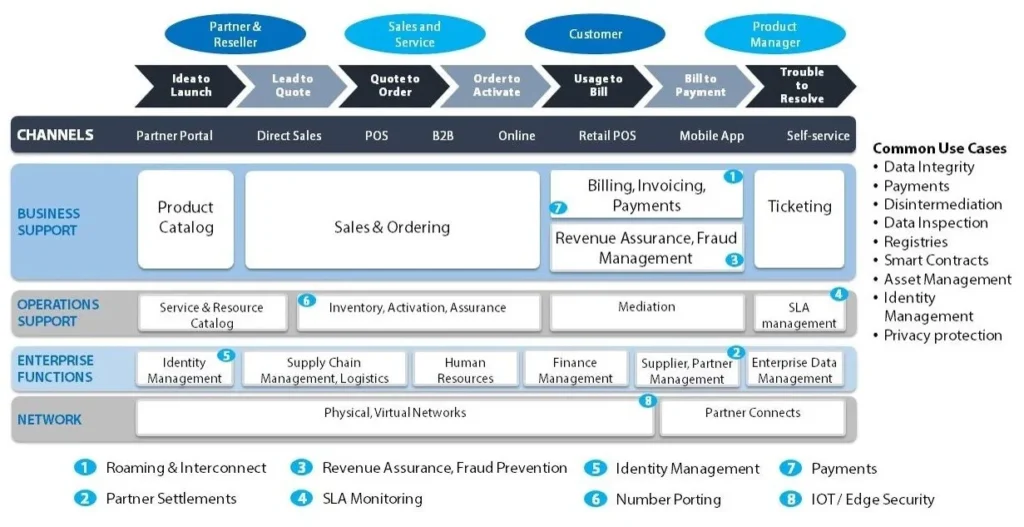
New competition, shorter product life cycles, cost pressures, and new and converging technologies create an increased demand for professionals who can effectively lead, manage, and deliver information and communication technology (ICT) systems.
Naturally, having accurate, accessible, secure data is fundamental to a successful AI initiative, providing additional topics addressed in this program.
This certificate is designed for communications industry professionals looking for advanced technical knowledge of applied telecommunications integrated with a solid grounding in business management, in light of the digital transformation and emerging information technologies (e.g., AI, blockchain, social media, analytics, big data, robotic process automation).
As artificial intelligence reshapes how telecom organizations operate and compete, the central question is no longer whether AI will replace human capability, but how leaders will integrate the strengths of both to unlock new levels of innovation, productivity, and enterprise value. The future is not a choice between humans or AI; it is a leadership challenge of orchestrating the best of both.
GIIM’s programs are designed precisely for this moment. They equip telecom leaders to harness the combined potential of human intelligence and artificial intelligence, ensuring each amplifies the other to drive measurable business impact.

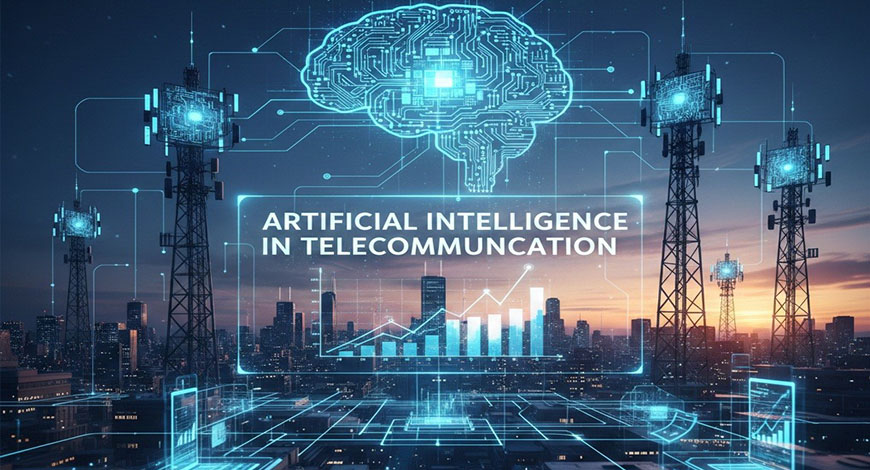
Examples of AI’s impact improving efficiencies, accuracy, and accessibility


1. Autonomous Network & RF Optimization
Signal & Parameter Optimization: Dynamic beamforming, automated antenna tilt adjustments, and real-time Radio Access Network (RAN) optimization to maximize coverage and capacity.
Quality of Transmission (QoT) Estimation: Real-time prediction and adjustment of link-level transmission quality (bit error rates, latency, throughput) across complex hybrid optical and wireless networks.
Dynamic Spectrum Allocation: AI-driven spectrum sharing and allocation in 5G/6G environments to reduce congestion during demand spikes.
Self-Healing Networks: Agentic AI systems capable of detecting configuration drifts, resolving faults, and rerouting traffic automatically without human intervention.
2. Infrastructure, Energy, & Operations
Power Management & Energy Efficiency: Intelligently powering down unused network nodes or data center cooling systems during off-peak hours to slash carbon emissions and operational costs.
Predictive Maintenance & Fault Prevention: IoT sensor analytics and ML models that predict hardware degradation or fiber degradation before outages occur.
Network Anomaly & Traffic Management: Real-time visibility into traffic surges, automatic load balancing, and DDoS attack mitigation.
3. Security, Risk, & Revenue Assurance
Fraud Prevention & Threat Detection: Detection of SIM swapping, spoofing, bypass fraud, account takeover, and unbilled revenue leakage using real-time behavioral analytics.
AI-Driven Cyber Defense: Automated network isolation and vulnerability management in response to zero-day enterprise threats.
Billing & Dispute Resolution: AI scanning of high-volume transaction feeds to prevent billing errors and reduce customer disputes.
4. Hyper-Personalized Experience & Revenue Growth
Personalized Customer Experience & Marketing: AI-driven Next-Best-Action (NBA) engines for personalized plan recommendations, tailored retention offers, and dynamic pricing.
Next-Gen Conversational & Agentic Support: Generative/Agentic AI customer support agents capable of handling end-to-end technical troubleshooting, bill explanations, and plan upgrades.
Enhanced Predictive Analytics: Predicting subscriber churn, lifetime value (LTV), network expansion demand, and long-term capital expenditure ROI.
5. Emerging “Telco to AI-Co” Value Opportunities
Edge Computing & AI Inferencing Hosting: Monetizing telco infrastructure by hosting localized AI inference workloads at network edge nodes for lower latency.
Network Slicing On-Demand: Automatically provisioning dedicated network slices for specialized B2B use cases (e.g., autonomous vehicles, smart factories, metaverse applications).
Sales & Back-Office Automation: Streamlining complex enterprise B2B quote generation, order management, compliance checks, and workforce management.
What Managers Need To Know
It addresses the demanding requirements of the global communications industry, businesses, and government for technical expertise combined with essential business/management skills. The certificate prepares candidates to develop strategies and plans and how to effectively manage leading-edge communications capabilities for both internal and client constituents.

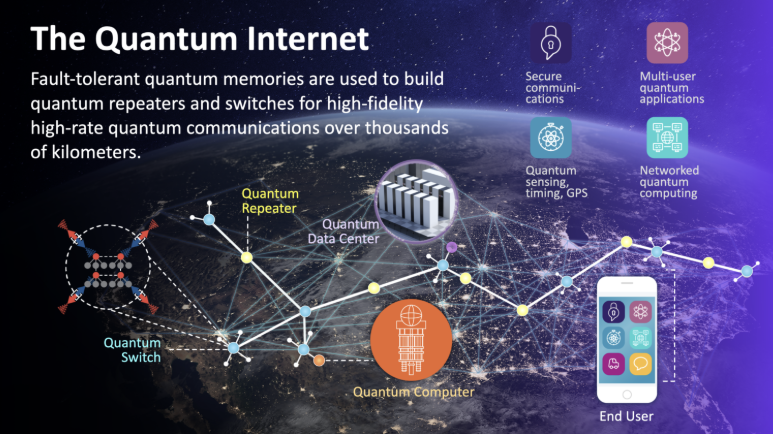
Several research groups now project that early versions of a quantum internet could emerge within the next decade—a development that would fundamentally reshape secure communications and distributed computing. The underlying technologies draw on quantum phenomena that behave very differently from classical physics, enabling capabilities such as ultra‑secure key distribution and instantaneous state transfer across networked systems.
Governments, major enterprises, and leading universities are treating this as a strategic priority, investing billions annually to accelerate breakthroughs. The result is a global mix of collaboration and competition, as nations and companies work simultaneously to advance the science, secure their infrastructures, and position themselves for advantage in the next wave of network innovation.
Timelines remain uncertain. Some experts point to 2030 as a plausible horizon for a functional quantum network, though similar optimism has surrounded other breakthrough technologies in the past. And the first generation of a quantum internet will likely be hybrid in nature—built on today’s fiber‑optic infrastructure and classical relays rather than a fully quantum-native architecture. In many ways, the early experience may resemble the current internet, which already moves data at near‑light speeds over fiber.
The strategic takeaway: momentum is real, investment is accelerating, and early capabilities may arrive sooner than expected—but leaders should anticipate a phased evolution rather than a sudden leap.
By tuning quantum‑dot emission to telecom wavelengths, researchers have effectively removed one of the last major barriers to deploying quantum networks over today’s global fiber infrastructure. This shift turns quantum networking from a laboratory exercise into an integration challenge—opening the door to quantum chips, repeaters, and communication modules that can plug directly into existing systems.
The field is now positioned for accelerated progress, with competition expected to intensify as companies race to deliver the first scalable, interoperable quantum‑network architecture.
Two credible early‑market pathways are emerging:
- Secure government and financial networks (≈5‑year horizon): Telecom‑ready quantum dots could be deployed over existing fiber to enable quantum‑secure communication without major infrastructure upgrades.
- Hybrid data‑center integration: Quantum nodes operating alongside CPUs and GPUs could form distributed quantum clusters, enabling new classes of optimization, simulation, and cryptographic workloads.
Both scenarios benefit from modular, standards‑aligned designs, which reduce integration friction and create a clearer path to scale, interoperability, and commercial viability.
Customized Programs

The goal for these candidates is to become a technical business leader responsible for planning communications products and services, for managing the resources required to implement the plan (including people, products, networks, and systems), and for making decisions and budgeting for development, acquisition, installation, and maintenance of products and services. The courses are designed for IT and non-IT professionals in the telecommunications industry whose roles involve leveraging digital telecommunications industry opportunities to provide demonstrable value from their IT investments, in light of the digital transformation and emerging information technologies (e.g., AI, blockchain, social media, analytics, big data), while addressing important considerations like providing a secure infrastructure and hybrid work environment.